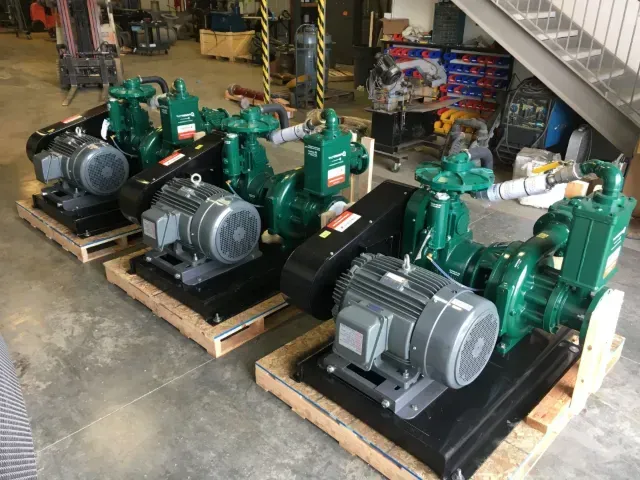
The pump shows up in the schedule as one line item with one delivery date. That is almost never how it arrives.
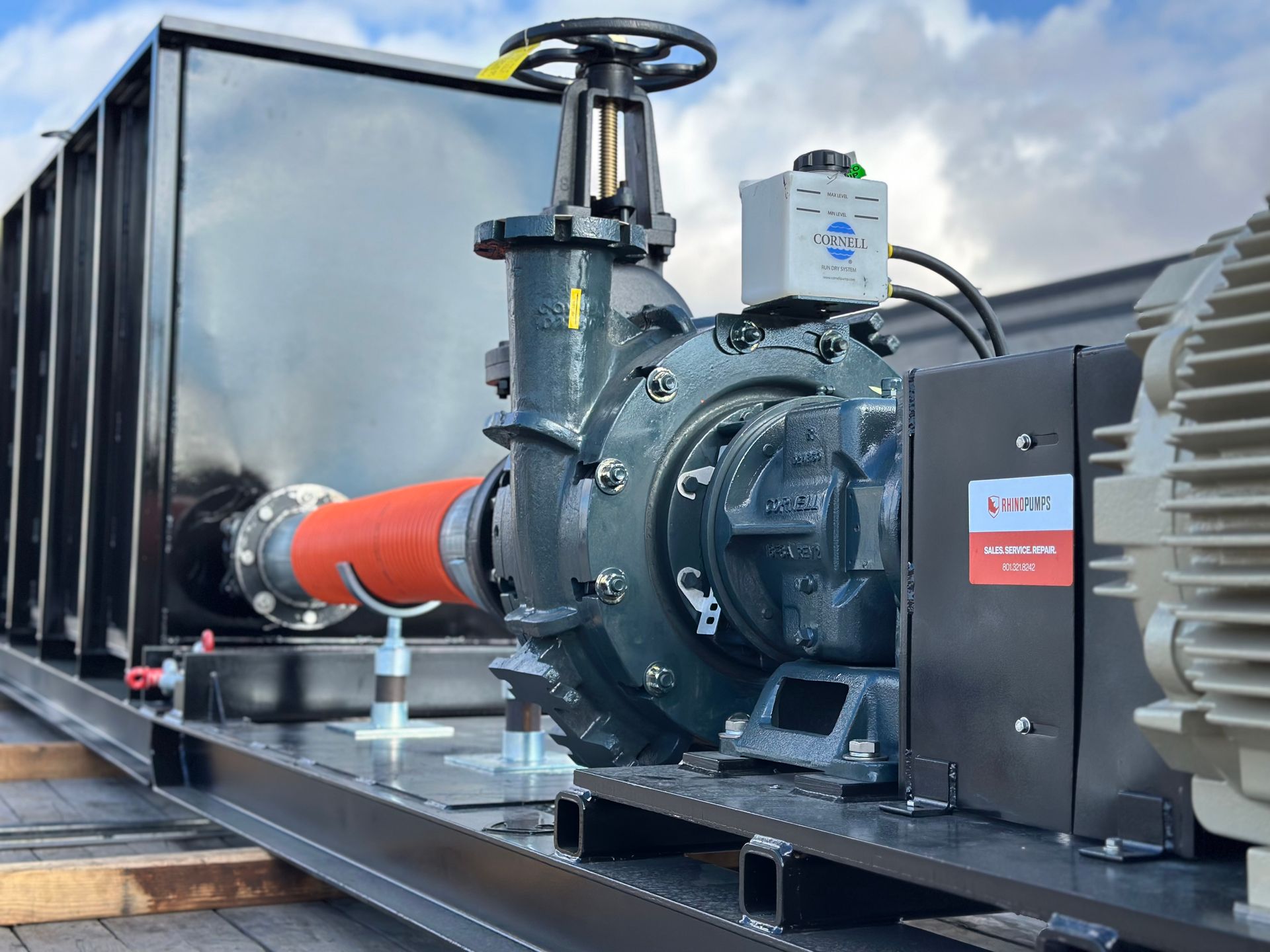
A pump package is not a pump. It is a pump, a motor, a base, a control panel, and usually a drive. Those come from different places on different clocks, and the schedule you built assumed one clock.
This is about which clock is actually the slow one, and about the sequencing mistake that costs more weeks than any lead time on the list.
You will notice there are no durations anywhere below. That is deliberate. Lead times move constantly and vary by manufacturer, voltage, enclosure and whatever the market is doing that quarter, so any number a contractor acts on has to come off a current quote rather than off an article. What does not change is the sequence and the failure modes, and those are what is worth knowing.
What is actually in the package
Before you can find the long pole you have to know what is in the bundle. A typical engineered pump package carries most of these, and they rarely come from one building.
| Item | What determines its clock |
|---|---|
| Bare pump | Configuration and materials. Common selections are the predictable part of the package. |
| Motor | Frame, voltage, enclosure and duty. Standard is stocked. Anything else is not. |
| Base or skid | Fabrication and, if it is engineered, drawing approval before fabrication. |
| Control panel | Built to your approved drawing, plus the clocks of every component inside it. |
| Drive | Market conditions that quarter. The most volatile item in the package. |
| Seals, couplings, instruments | Usually short, occasionally the thing nobody checked. |
What actually runs long
It is rarely the pump.
The motor, when it is not standard
A standard frame at a standard voltage in a standard enclosure is a warehouse item. Change any one of those and it becomes a build. Non-standard voltage, inverter duty, explosion proof, high horsepower, or a frame nobody stocks all move the motor from picked to made, and a made motor sits behind whatever else that plant is making.
The control panel, because it is built and not picked
This is the one contractors underestimate most consistently, and the reason is structural. A UL 508A panel does not exist when you order it. It is fabricated to your drawing, after your drawing is approved. So the panel carries two clocks in series: the approval of its own drawing, and then the fabrication.
And there is a third clock inside it. The components that go in the enclosure have their own lead times, and the panel builder does not control them. A panel can be fully engineered, approved and ready to wire while one relay or one meter holds the shipment.
It is worth asking any supplier whether they build their own panels or buy them. Ours are built in our own UL 508A listed panel shop, which means the fabrication clock is one we can see and schedule rather than one we are relaying to you from somebody else.
The drive, because the market moves
Drives are the item most likely to change between quote and release. That is not a supplier being cagey, it is a genuinely volatile market that has swung hard in both directions in recent years.
Two practical consequences. Get the drive lead time confirmed at release rather than trusting the quote, and ask what the substitution position is if the quoted drive slips. A named alternate agreed at submittal is worth a great deal more than a conversation about it later.
Anything with a non-standard material
Specify a casting in something the foundry does not pour every week and you are waiting on a pour schedule, not a warehouse. Duplex, high chrome, and specialty alloys all put you in a queue that is measured in pours rather than in shipping days.
The pump is usually the one item you can count on. That is exactly why the schedule keeps slipping: everybody tracks the pump.

The mistake is sequencing, not selection
Here is the failure that costs the most and gets noticed the least.
Nothing gets released to manufacture until submittals are approved. So submittal review time is not overhead running alongside lead time. It is in front of it, in series. A month in review is a month added to every item in the package, not a month absorbed by them.
That is bad enough on one pass. It is rarely one pass. The real loop is submit, review, comments, revise, resubmit, review again. Each round trip adds its full duration to everything downstream, and a single open comment on a minor item can hold the release of the two items that needed the most time.
Which brings us to the habit that does the damage. Contractors routinely hold the whole package waiting on one open item, then release everything at once. The long-lead items were sitting idle the entire time they could have been building.
Four things that buy back weeks
One. Ask what is long before you ask what it costs
The ranking of long-lead items in a package is not obvious and it changes quarter to quarter. Ask for the ranking at quote, not at release. A supplier who cannot rank the items in their own package is telling you something useful.
Two. Release in parts
A partial release on the motor and the panel while a minor item is still in review costs nothing and can save weeks. Most suppliers will do it if you ask. Almost nobody asks. This single question is the highest-return item on the list.
Three. Get the field dimensions early
Some items cannot be released without them. If the pit is not poured, find out now which items that blocks, rather than discovering it at release. The answer determines whether concrete is on your critical path or not.
Four. Settle the drive question at submittal
Confirm the drive at release rather than at quote, and agree the substitution position in writing while everybody is still being reasonable about it.
Or you collapse the clocks
Everything above is how you manage a package assembled from several suppliers on several clocks. The other option is to not have several clocks.
A RhinoStak package is fabricated, assembled and factory-tested at our facility with performance confirmed before it ships, and we manage the installation. One release, one schedule, one number to call when the schedule moves. Controls are an option on that package rather than an assumption, so whether the panel clock comes inside it is a decision you make at spec.
That does not make the sequencing questions go away. It reduces how many of them are yours.
Check this Monday
- On your next pump package, ask the supplier to rank the items by lead time. Not a delivery date, a ranking.
- Find out whether submittal review time is inside or outside the lead time you were quoted. It is almost always outside, and in series.
- Ask whether a partial release is possible on the long items.
- Identify which items need field dimensions and when those dimensions actually exist.
- Compare the drive lead time against the panel lead time. If the drive lands after the panel is built, somebody is coming back to install it.
- Ask who builds the panel. If the answer is a third party, there is a clock in your schedule that your supplier is relaying rather than controlling.
The pump was never the long pole. Find out what is, before the schedule assumes it is not.
Service Territory
Sales, service and engineered pump packages across the Intermountain West and Southwest. Pump repair is also accepted from Oregon, New Mexico, Wyoming and Montana.
Utah
Headquarters, main shop and UL 508A panel shop in Pleasant Grove.
Idaho
Caldwell branch covering the Treasure Valley and southern Idaho contractors.
Arizona
Phoenix branch covering central and southern Arizona municipal and industrial work.
Nevada
Northern and southern Nevada coverage for municipal, mining and industrial packages.
Washington
Kirkland branch covering western Washington and the Columbia Basin.
Colorado
Longmont branch covering the Front Range and eastern plains.
Frequently asked questions
What has the longest lead time in a pump package?
Usually not the pump. The most common long poles are a non-standard motor, the control panel, and the drive. A motor becomes a build rather than a warehouse pick as soon as the voltage, frame, enclosure or duty is non-standard. A panel is fabricated to your approved drawing after approval, and the components inside it have their own lead times. The drive depends on the market that quarter and is the item most likely to change between quote and release. Ask your supplier to rank the items rather than quoting you a single delivery date.
Is submittal approval time included in a pump lead time?
Almost never, and this is the most expensive misunderstanding in pump procurement. Nothing is released to manufacture until submittals are approved, so review time sits in front of the lead time in series rather than running alongside it. A month in review adds a month to every item in the package. Because the real loop is submit, review, comments, revise and resubmit, each round trip adds its full duration to everything downstream.
Can I release part of a pump package while the rest is in review?
Usually yes, and it is the single highest-return question you can ask. A partial release on the long items, typically the motor and the panel, while a minor item is still in review costs nothing and can save weeks. Most suppliers will do it if asked. Very few contractors ask, which is why long-lead items so often sit idle waiting on an open comment about something small.
Why does a control panel take longer than the pump?
Because it does not exist when you order it. A UL 508A panel is fabricated to your drawing after that drawing is approved, so it carries the approval clock and the fabrication clock in series. It also carries a third clock you cannot see: the components inside the enclosure have their own lead times, and the panel builder does not control them. Worth asking whether your supplier builds panels in their own shop or buys them, because a relayed clock is one nobody in the chain can actually schedule.
How do I keep a pump package from delaying my project?
Four things, in order of return. Ask for the items ranked by lead time at quote rather than at release. Ask whether a partial release is possible so the long items can start building while minor comments are resolved. Identify which items need field dimensions and confirm when those dimensions will actually exist. And settle the drive, including a written substitution position, at submittal rather than when it slips. Send us the submittal and the schedule and we will tell you which items are going to be late.
Send us the submittal and the schedule
We will rank the package by lead time, tell you what is going to be late, and tell you what a partial release buys back. On-site assessment is available case by case.