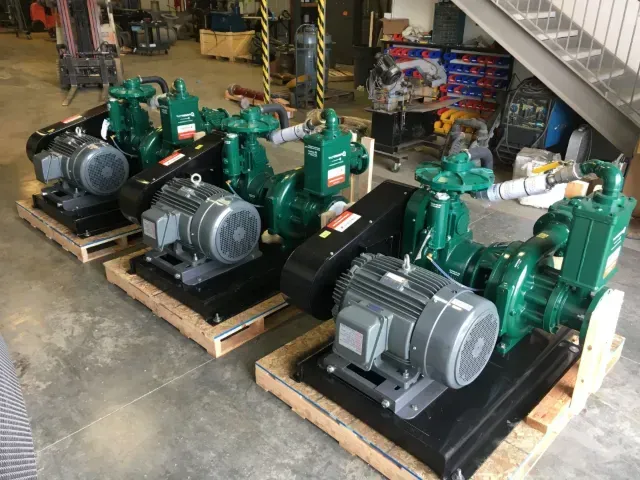
Every pump conversation starts with the quote, because the quote is the only number anybody has. There are two separate problems with that, and most buyers only ever hear about the second one.
The lowest quote is not the cheapest quote
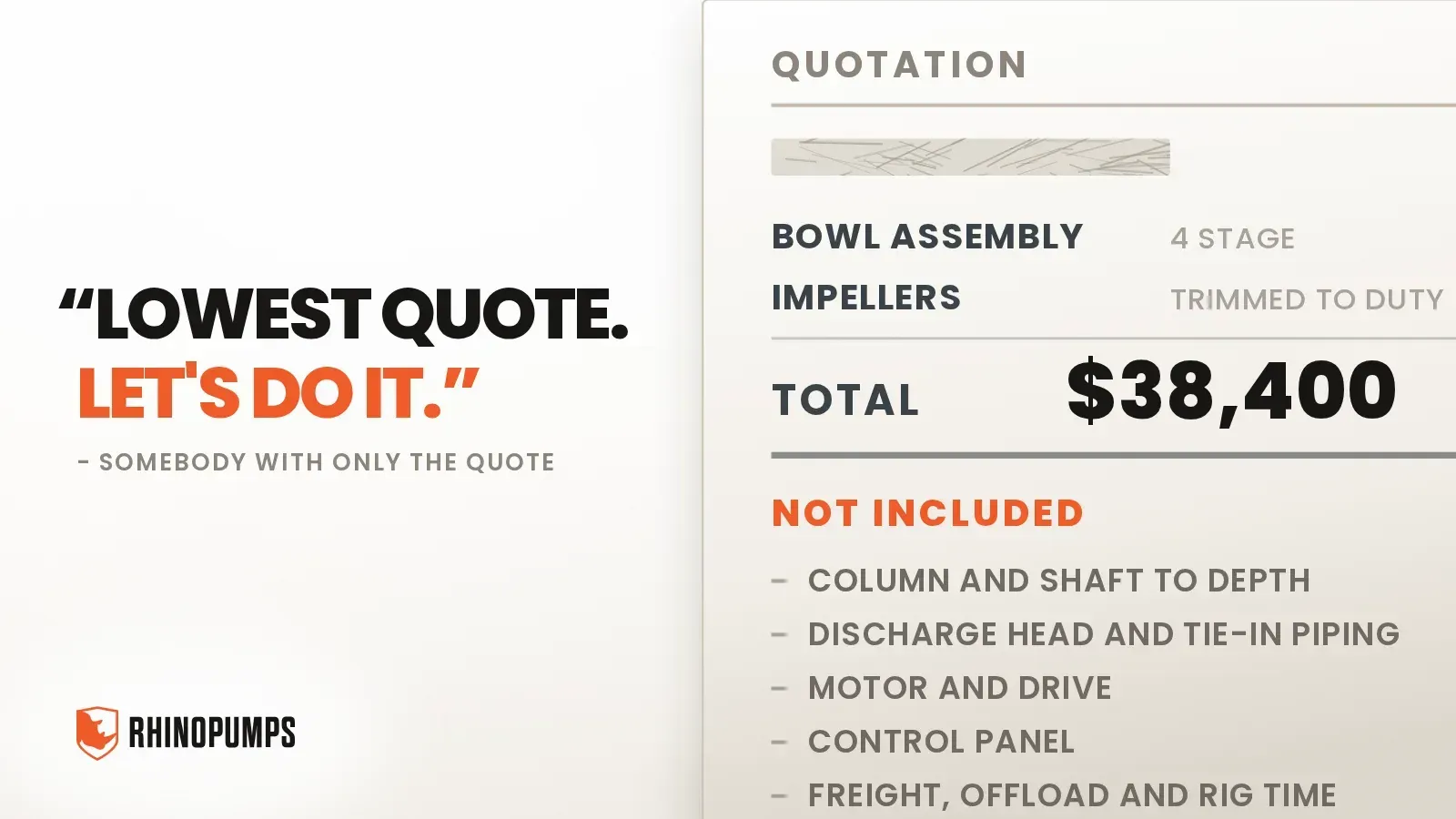
A quote is not a price. It is a scope with a price attached.
Two quotes on the same pump can sit a third apart because one of them left things out. And the things left out do not go away. They come back as change orders, after you have signed, after the other bidders have gone home, and after you have lost the ability to compare anything.
Here is what routinely is not in a thin vertical turbine quote:
- Column and shaft for your actual setting depth, rather than a nominal depth somebody assumed
- The discharge head, and the above-ground piping, fittings and valves to tie it in
- The motor or engine, and the drive
- The control panel, starter or VFD
- Freight, offload, and rig or crane time
- Installation labor, and startup
- Electrical service, disconnect, conduit and wire
- The pad
- Well plumbness and alignment work before anything gets set
- Spare parts, and the documentation package
None of that is optional. It is the difference between a pump on a truck and water in a pipe. If it is not in the quote, it is in your lap.
So the first thing to do with a stack of quotes is make them comparable. Issue one written scope to every bidder, and ask each of them to list their exclusions in writing. Ask specifically, because a quote with no exclusions listed is either genuinely complete or has not been read carefully, and you want to know which.
A change order is a price you pay after you have lost the ability to shop. That is the entire mechanism. Nothing about it requires anybody to have behaved badly, which is why it keeps working.
Even when the quotes are comparable, the price is about a tenth of it
Published lifecycle cost work puts it plainly. Over a 15 to 20 year lifespan, the initial price of a typical medium-size industrial pumping system is only about 10 percent of its total cost, against 40 percent for the energy needed to run it and 25 percent for the maintenance needed to keep it running efficiently. The remaining quarter is everything else: installation, operations, downtime, disposal.
| Cost category | Share of the 15 to 20 year total |
|---|---|
| Initial purchase price | About 10 percent |
| Energy | About 40 percent |
| Maintenance | About 25 percent |
| Installation, operations, downtime, disposal | The remaining quarter |
The Department of Energy's lifecycle costing guidance adds the qualifier that matters most for irrigation: energy dominates lifecycle cost once a pump runs more than about 2,000 hours a year. A pump that runs a season is well past that.
One thing to be straight about, because you will see it quoted at you. There is a widely repeated claim that energy is 85 percent of a pump's total cost of ownership. We could not find that figure in the DOE source it usually gets attributed to, so we do not use it. The 10 / 40 / 25 / 25 split is the published number and it is more than enough to make the point.
Which makes efficiency the decision, and efficiency is measurable
If energy is 40 percent of the number and the quote is 10 percent, then how efficiently the plant runs matters about four times more than what you paid for it.
There is a published standard for that, the Nebraska Pumping Plant Performance Criteria, and almost nobody has ever been measured against it. Rather than repeat it here, we wrote it up properly: what a pumping plant efficiency test measures, what the criteria actually say, and how to decide whether a repair is worth it. That piece also covers the diesel versus electric comparison, which moves with fuel price and is not a permanent answer.
For the purposes of this page, one sentence is enough: before you compare two quotes, you need a measured efficiency number for what you are replacing, because without it every lifecycle figure below is a guess.
Two dates worth knowing if you are buying motors
NEMA Premium efficiency levels were established through the Energy Independence and Security Act of 2007, and "premium efficiency" has been the shorthand ever since. The minimum that actually applies depends on horsepower, pole count and enclosure, so it is worth asking a supplier to state the specific efficiency figure for the motor being quoted rather than accepting the phrase as a description.
Two regulatory items are worth having in mind:
- Expanded scope electric motors. DOE issued a final rule setting energy conservation standards for expanded scope electric motors, with compliance required on and after January 1, 2029. That brings motor types into the standards that were previously outside them. It does not change the existing general-purpose rule, but if you are buying motors in the next couple of seasons it is a reason to ask what happens to the replacement market after that date.
- Pumps themselves. DOE's commercial and industrial pump standard has been in effect since January 27, 2020. DOE published a notice in 2022 exploring tighter standards, and we could not verify that any amended pump standard has since been finalized. So if someone tells you a new pump efficiency rule is imminent, ask them for the Federal Register citation. That is a fair question and it is quickly answered.
The ten year worksheet
Fill this in for the pump you are actually considering. It takes twenty minutes and it is the only thing on this page that will change a decision by itself.
| Line | Your number |
|---|---|
| Purchase price, installed, all exclusions closed | $ |
| Annual operating hours | |
| Measured or estimated plant efficiency | % |
| Percent of Nebraska criteria | % |
| Annual energy or fuel cost, times 10 years | $ |
| Annual maintenance, parts and labor, times 10 years | $ |
| Expected wear part replacements over 10 years | $ |
| Downtime cost per event, times expected events | $ |
| Ten year total | $ |
| Divided by acre-feet delivered per year | $ per acre-foot |
That last line is the number to compare between options. Not the quote.
And note the first line: installed, with the exclusions closed. If you fill that in off a thin quote, every number below it is wrong, and the worksheet will confidently hand you the wrong answer. That is the two problems on this page meeting each other.
Check this Monday
- Ask every bidder to list their exclusions in writing, and compare those lists before you compare prices.
- Issue one written scope to all of them, so you are comparing the same job rather than three different jobs.
- Get a pumping plant test if you have never had one, so the efficiency line on the worksheet is measured rather than assumed.
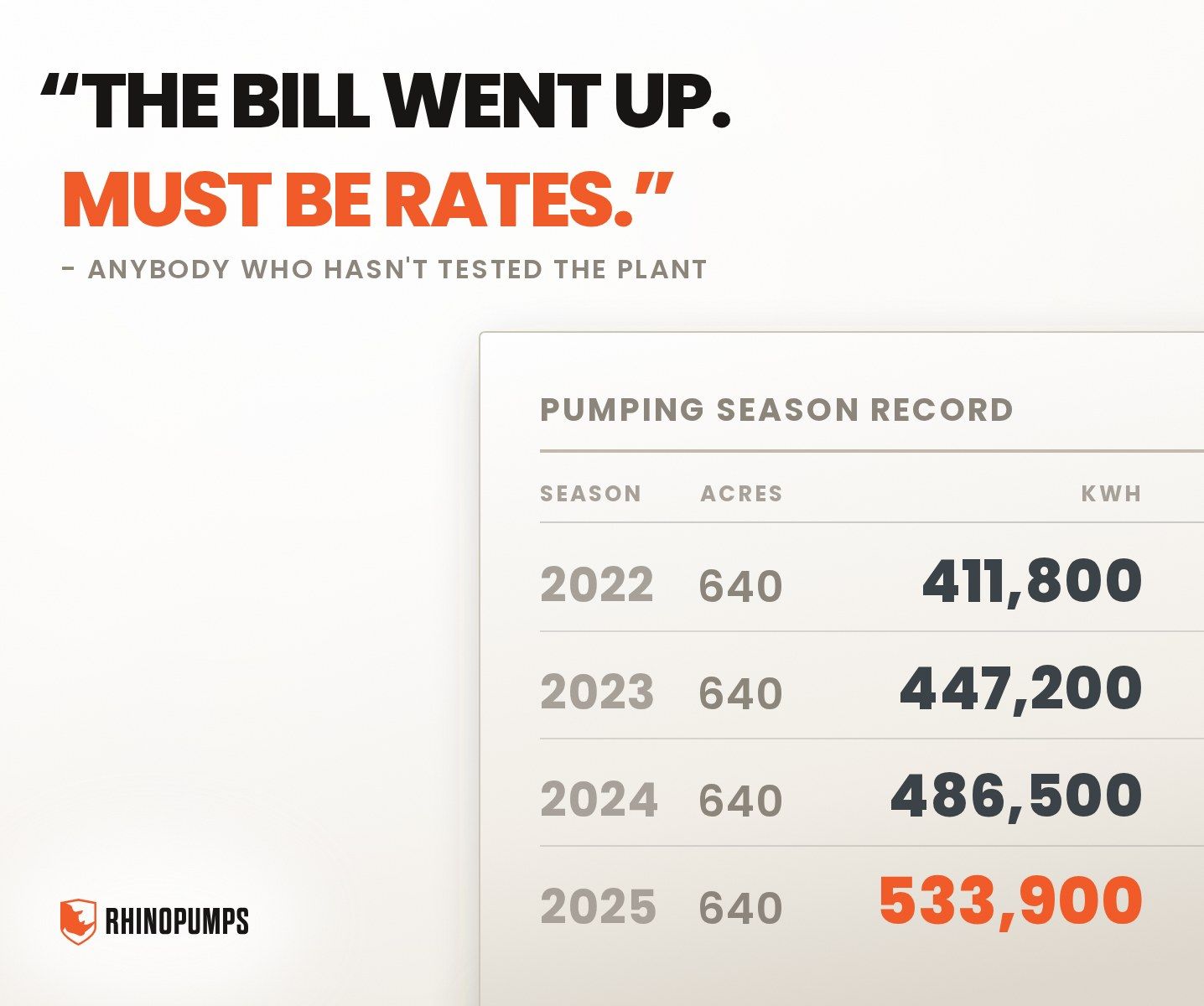
- Pull three years of energy cost per irrigated acre. Flat acreage and a rising number is the signal.
- If you are buying a motor, ask the supplier to state its efficiency figure rather than calling it premium.
- Fill in the worksheet before you look at a quote, not after.
The invoice was never the expensive part.
Service Territory
Sales, service and engineered pump packages across the Intermountain West and Southwest. Pump repair is also accepted from Oregon, New Mexico, Wyoming and Montana.
Utah
Headquarters and main shop in Pleasant Grove, serving irrigation accounts statewide.
Idaho
Caldwell branch covering the Treasure Valley and the Magic Valley irrigation districts.
Arizona
Phoenix branch covering central and southern Arizona ag and municipal work.
Nevada
Northern and southern Nevada coverage for irrigation, mining and municipal service.
Washington
Kirkland branch covering western Washington and the Columbia Basin.
Colorado
Longmont branch covering Front Range and eastern plains irrigation accounts.
Frequently asked questions
Why are two pump quotes so different in price?
Usually because they are quoting different scopes, not different prices. A quote is a scope with a price attached, and two quotes on the same pump can sit a third apart because one of them left items out. The items that routinely fall outside a thin vertical turbine quote are column and shaft for the actual setting depth, the discharge head and the piping to tie it in, the motor and drive, the panel or VFD, freight and rig time, installation labor and startup, electrical service and conduit, the pad, well plumbness and alignment work, and spare parts and documentation. None of that is optional, so whatever is missing comes back later as a change order. Issue one written scope to every bidder and ask each to list exclusions in writing before you compare any prices.
What should be included in a vertical turbine pump quote?
Everything between a pump on a truck and water in a pipe. That means the bowl assembly, the column and shaft sized to your actual setting depth, the discharge head, above-ground piping, fittings and valves, the motor or engine and any drive, the control panel or VFD, freight and offload, rig or crane time, installation labor, startup, electrical service and conduit and wire, the pad, any well plumbness and alignment work needed before setting, and the spare parts and documentation package. A quote that lists no exclusions is either genuinely complete or has not been read carefully, and it is worth asking which.
How much of a pump's cost is the purchase price?
About a tenth of it. Published lifecycle cost work puts the initial price of a typical medium-size industrial pumping system at roughly 10 percent of total cost over a 15 to 20 year lifespan, against about 40 percent for energy and about 25 percent for maintenance, with the remaining quarter covering installation, operations, downtime and disposal. The Department of Energy adds that energy dominates lifecycle cost once a pump runs more than about 2,000 hours a year, which any irrigation pump running a season comfortably exceeds. That is why efficiency, not purchase price, is the decision that carries the cost.
How do I compare two pumps on total cost instead of price?
Work out ten year total cost and divide it by acre-feet delivered per year, which gives you dollars per acre-foot. The ten year total is the installed price with all exclusions closed, plus ten years of energy or fuel, plus ten years of maintenance parts and labor, plus expected wear part replacements, plus downtime cost per event times expected events. The critical input is the first one: if the installed price comes off a thin quote, every figure below it is wrong and the comparison will confidently point at the wrong pump.
Are there new efficiency regulations coming for pumps and motors?
For motors, yes. DOE issued a final rule setting energy conservation standards for expanded scope electric motors, with compliance required on and after January 1, 2029, which brings motor types into the standards that were previously outside them. For pumps, DOE's commercial and industrial pump standard has been in effect since January 27, 2020, and while DOE published a notice in 2022 exploring tighter standards, we could not verify that any amended pump standard has since been finalized. If a supplier tells you a new pump rule is imminent, asking for the Federal Register citation is a fair and quickly answered question.
We will run the cost per acre-foot with you
Send us the quotes you are comparing, the setting depth and the annual hours, and we will tell you what is missing from each scope and what the ten year number looks like. On-site assessment is available case by case. Rhino is also hiring across all six branches, in service, shop and field.