Fire Water and Process Water Pump Skids for Mines
Fire water and process water both have to show up at the right pressure every time someone opens a valve. Here is what goes on a mine pump skid, how fire water and process water skids differ, and how Rhino Pumps builds and tests RhinoStak skids for mines across the Mountain West.
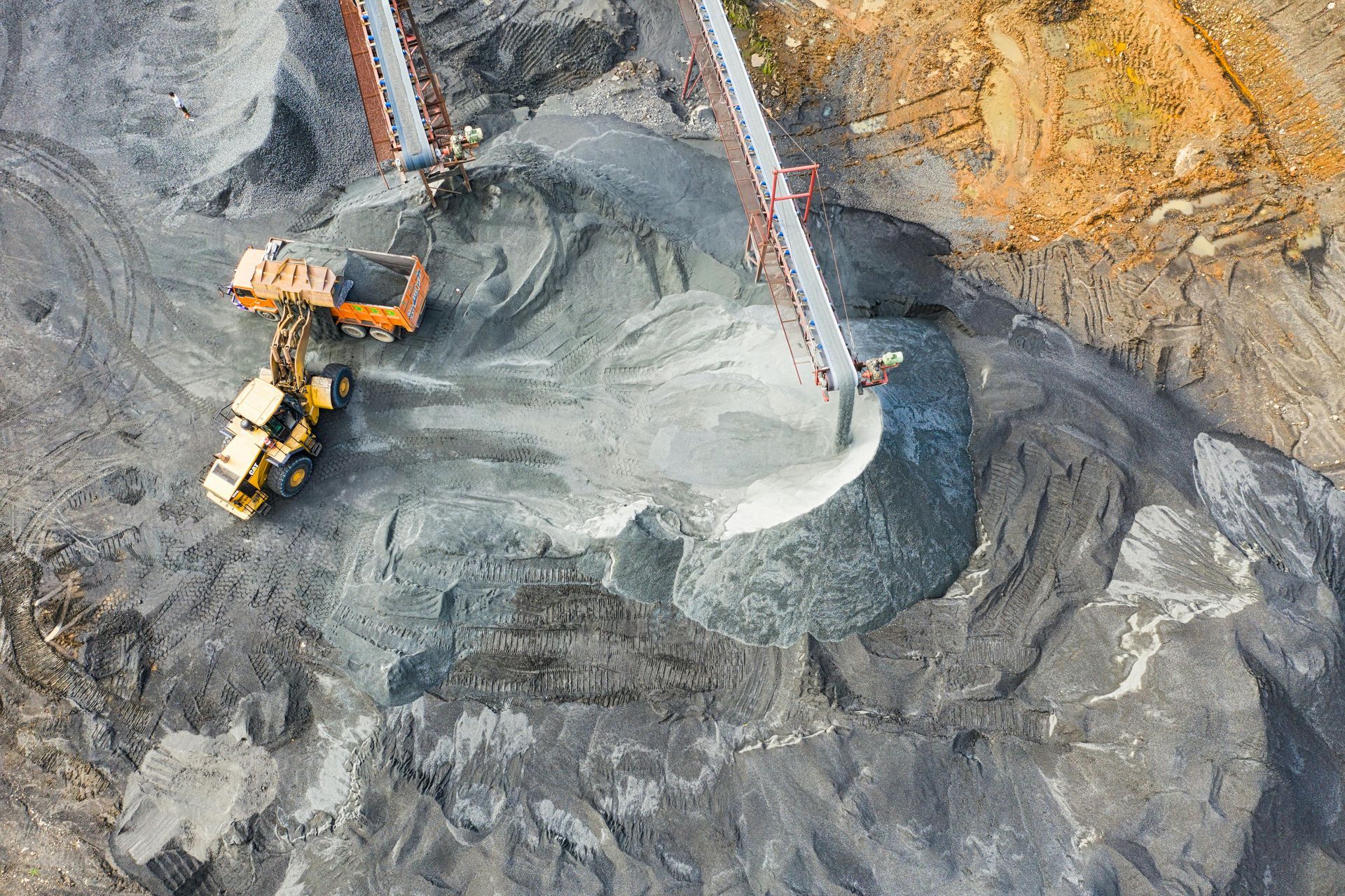
A mine runs on water that most people never see. The concentrator needs process water at steady pressure. Slurry pumps need clean gland seal water. Water trucks need a fill stand for the haul roads. And the mill, conveyors, shops and fuel bays need fire water that sits ready for months and then has to work the first time.
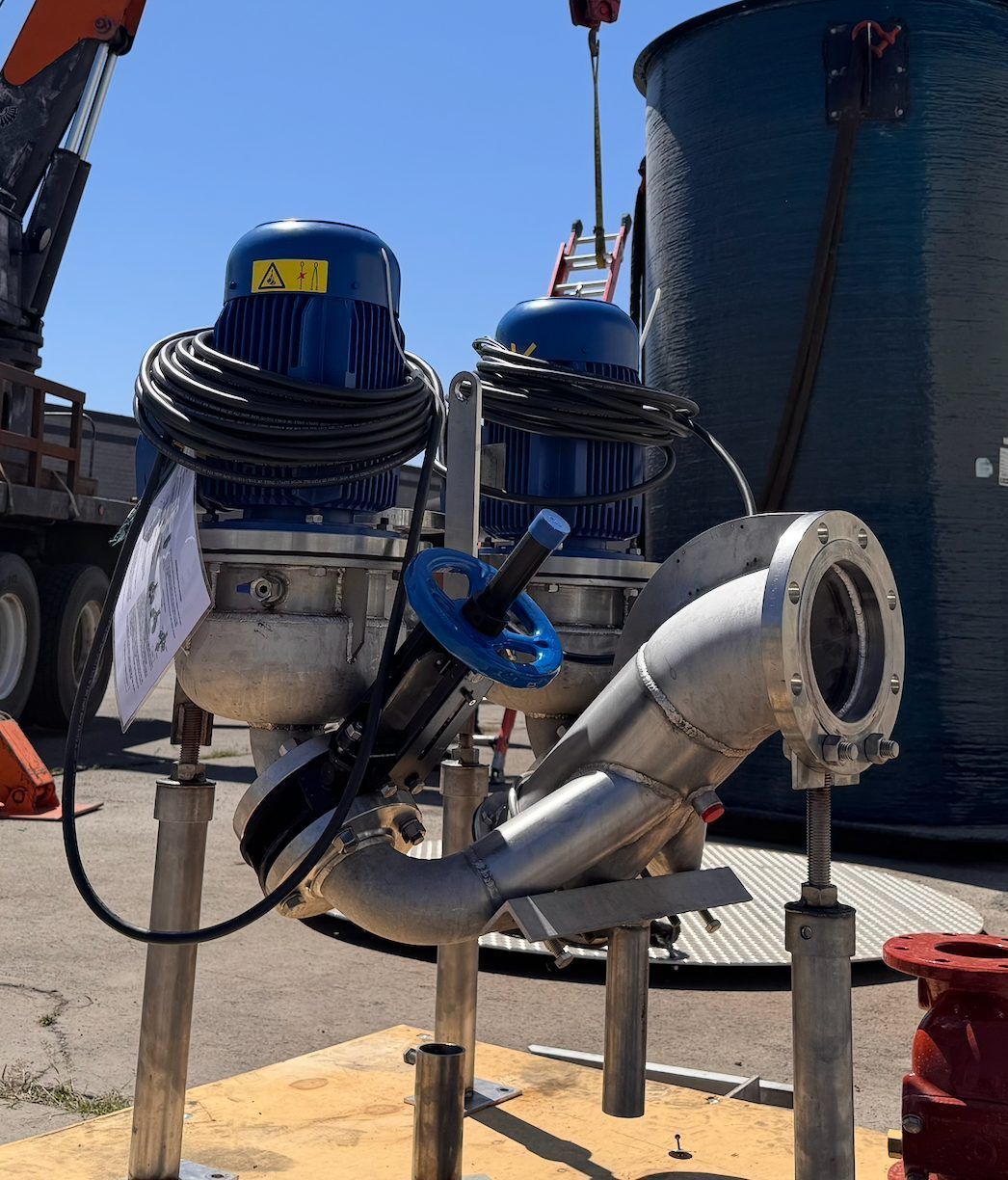
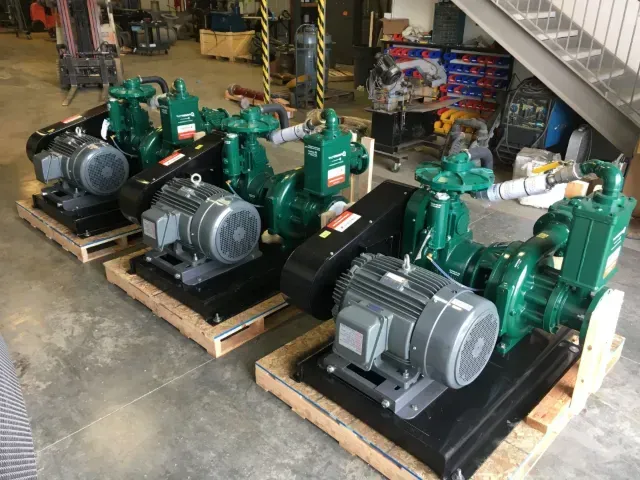
A pump skid puts the pumps, motors, piping, valves and instrumentation for one of those jobs on a single steel base, built and tested before it reaches the site. That means less field fabrication at a remote mine, a shorter install, and one supplier accountable for how the whole package runs. Rhino Pumps builds these as RhinoStak packages in our Pleasant Grove, Utah shop, for mines in Utah, Idaho, Nevada, Arizona, Washington and Colorado. Our field crews are MSHA trained and Rhino is Avetta compliant.
Fire Water Pump Skids
Fire water at a mine protects the places where a fire would shut the operation down: the mill, conveyor galleries, maintenance shops, warehouses and fuel and lube bays. The system design comes from the mine's fire protection engineer and has to satisfy the authority having jurisdiction and the property insurer. We build the pump package to that design.
Where the system calls for listed equipment, we supply UL/FM listed fire pumps built to NFPA 20, the standard for stationary fire pumps. Available types include horizontal split case, vertical turbine and end suction fire pumps, driven by electric motors or diesel engines. See our fire pumps page for the full range.
What Goes on a Fire Water Skid
A typical package includes the main fire pump and its driver, a jockey pump that holds system pressure so the main pump does not start on small leaks, controllers listed for fire pump service, suction and discharge valves, and a test header or flow meter for annual flow testing. Diesel packages add the fuel tank and engine accessories.
Listed Controllers and Drivers
Fire pumps use controllers that are listed for fire pump service, and diesel drivers that are listed for fire pump duty. Those come from the controller and engine manufacturers. Our UL 508A listed panel shop builds the controls for the process water and booster side of a project, not the fire pump controllers.
Electric or Diesel
Electric drive is simpler to maintain where utility power is reliable. Diesel drive keeps the fire pump independent of the power system, which is why it is common at remote mine sites and on weak or single-feed power. The final call belongs to the fire protection engineer and the insurer.
A fire pump spends most of its life waiting, so testing matters as much as the build. Fire pumps are inspected and flow tested on a schedule under NFPA 25. Rhino Pumps performs annual performance testing and controller inspections, and repairs fire pumps of any make in our shop.
Process Water Pump Skids
Process water skids carry most of the day to day load at a mine. They are not governed by NFPA 20, so the design is driven by flow, pressure, the water quality and how much downtime the operation can live with.
- Mill process water boosters. Hold pressure across the concentrator as demand swings between grinding, flotation and wash water.
- Make-up and transfer. Move fresh water from wells, tanks or ponds to the plant. The well pumps themselves are a separate scope from the skid.
- Tailings reclaim return. Send recovered water from the tailings facility back to the mill.
- Gland seal water. Supply clean, filtered water to packed slurry pumps at a pressure above the slurry pump discharge.
- Dust suppression. Feed water truck fill stands and spray systems for haul roads and crusher areas.
- Wash-down and cooling water. Shop, equipment wash and cooling duties around the plant.
Most process water skids use end suction, split case or booster pumps, with vertical turbine pumps where the skid draws from a sump or tank below grade. A duty and standby pair is the usual starting point, so one pump can be pulled for service while the other keeps the plant running. Variable frequency drives let one skid follow changing demand instead of cycling pumps on and off.
Worth knowing: a skid is only as good as its isolation valves. If a pump cannot be swapped without shutting down the whole skid, the standby pump is not really standby. We lay out valves and spool pieces so either pump can come out while the other runs.
Fire Water vs Process Water Skids
| Item | Fire water skid | Process water skid |
|---|---|---|
| Governing standard | NFPA 20 for the pump installation, NFPA 25 for testing, plus insurer requirements | Plant specification and good engineering practice |
| Pumps | UL/FM listed fire pumps plus a jockey pump | End suction, split case, booster or vertical turbine |
| Drivers | Electric motor or diesel engine listed for fire pump duty | Electric motors, often on VFDs |
| Controls | Controllers listed for fire pump service | Optional panels from our UL 508A listed panel shop, or wired to your MCC |
| Duty pattern | Standby, tested on a schedule | Continuous or demand driven |
| Redundancy | Set by the fire protection design | Duty and standby is typical |
How a RhinoStak Skid Gets Built
- Define the duty. Flow, pressure, fluid, solids, suction conditions, power available, site elevation and climate. For fire water, the fire protection engineer's design sets the requirements.
- Engineer the package. Pump and driver selection, piping, valves, instrumentation and a base sized for shipping and setting. Controls are optional, not standard, so the skid can tie into your existing MCC and plant controls.
- Fabricate and assemble. The skid is built in our Pleasant Grove, Utah shop.
- Test before it ships. Packages are tested in our shop before delivery so problems are found on our floor, not at the mine.
- Ship and start up. The skid arrives assembled and ready to set. On-site startup support is scheduled case by case, and turnaround depends on the project.
- Service it for the long run. Rebuilds go through our shop with in-house machining, dynamic balancing to ISO 1940 and an eight-document QA package on every job. See pump repair.
What to Send Us for a Skid Quote
- The duty. Flow, pressure, the fluid and its temperature, and whether it carries solids.
- The suction side. Whether the skid draws from a tank, sump, pond or pressurized main, with the water levels and the site elevation.
- Power. Voltage, available capacity, and whether the site runs on utility power or generation.
- Controls. Whether you want our panel or will wire to your MCC, and how the skid needs to talk to the plant control system.
- The site. Indoors or outdoors, the climate, the footprint available, and any shipping or crane limits getting it there.
- For fire water. The fire protection engineer's design and any insurer requirements.
Design for the Site, Not Just the Duty
Mountain West mines run from freezing winters in northern Nevada and Idaho to Arizona summers that bake anything left in the sun. A skid for Elko needs a plan for freeze protection. A skid for an Arizona copper mine needs panels and motors cooled for desert heat. Elevation matters too: high sites have less atmospheric pressure, which leaves less suction margin for the pump, so suction conditions get checked at the real elevation. For more on mine duties, see our mining pumps page and Pumps for Arizona Copper Mines.
Service Territory
Frequently Asked Questions
Who builds fire water and process water pump skids for mines in the Mountain West?
Rhino Pumps builds fire water and process water pump skids for mines in the Mountain West through its RhinoStak package line. Skids for process water, boosters, gland seal water and dust suppression are engineered, assembled and tested in our Pleasant Grove, Utah shop, with controls and VFDs available as an option from our UL 508A listed panel shop. Where a fire water system calls for listed equipment, we supply UL/FM listed fire pumps built to NFPA 20. We serve mines in Utah, Idaho, Nevada, Arizona, Washington and Colorado, with locations in Elko, Nevada and Phoenix, Arizona.
Can Rhino Pumps supply UL/FM listed fire pumps for a mine fire water system?
Yes. Rhino Pumps supplies UL/FM listed fire pumps built to NFPA 20, including horizontal split case, vertical turbine and end suction pumps with electric motor or diesel engine drivers. The package is built to the mine's fire protection design, with controllers listed for fire pump service, a jockey pump and a test header or flow meter for annual testing. We also perform annual performance testing and controller inspections.
Should a mine fire water pump be electric or diesel?
It depends on the power at the site. Electric drive is simpler to maintain where utility power is reliable. Diesel drive keeps the fire pump independent of the electrical system, which makes it common at remote mines and on weak or single-feed power. The mine's fire protection engineer and insurer make the final call as part of the system design.
What comes on a mine process water pump skid?
A mine process water pump skid typically carries a duty and standby pump pair with motors, suction and discharge piping, isolation and check valves, strainers, pressure gauges and transmitters, and a flow meter, all on one steel base with lifting points. Variable frequency drives and a control panel can be added as an option. Common duties include mill process water boosting, make-up water transfer, tailings reclaim return, gland seal water and dust suppression.
Are RhinoStak pump skids tested before they ship?
Yes. Every RhinoStak package is assembled and tested in our Pleasant Grove, Utah shop before it ships, so the pumps, piping and any controls we supply are checked as one unit. The skid arrives assembled and ready to set, and on-site startup support is scheduled case by case.
Spec a Pump Skid for Your Mine
Send us the duty, the site and the drawings you have. A Rhino Pumps Solutions Engineer will tell you what we would build, what it needs to meet, and where a standard approach will and will not work.
Talk to an Engineer or call 801-321-8242Continue Learning About Pump Systems and Performance