Pumps for Arizona Copper Mines: Open Pit Dewatering, Slurry and Tailings
A copper mine moves water all day. It comes out of the pit, through the mill, back from the tailings and onto the leach pads. Here is how each of those duties is pumped at an Arizona copper operation, and how Rhino Pumps supplies, builds and rebuilds the pumps from our Phoenix location and Utah shop.
Arizona produces about 70 percent of the copper mined in the United States, according to the U.S. Geological Survey. Most of it comes from large open pits, so the pumping problems are big ones: pit water that changes with every storm and every bench, abrasive slurry running around the clock, long tailings lines, and acid leach solution that eats the wrong metal in a hurry. On top of that, the desert adds heat that cooks motors and panels and makes every gallon of water worth keeping.
Rhino Pumps works these duties from our Phoenix location at 4630 East Elwood Street, with major rebuilds, machining and panel work done at our Pleasant Grove, Utah headquarters. Our field crews are MSHA trained and Rhino is Avetta compliant. This page walks through the main pumping jobs at an Arizona copper mine and what drives the pump choice for each one. For the full lineup, see our mining pumps page.
Open Pit Dewatering in Arizona
Pit water comes from two places: groundwater that seeps in through the walls and floor, and stormwater that runs in off the benches and haul roads. An open pit dewatering plan has to handle both, and the pumps that do it change as the pit gets deeper.
Pit Sump Pumps
Water collects in a sump at the low point of the pit. The pump there lives with grit, swinging water levels and a move every time the pit floor drops. We supply electric submersible dewatering pumps and self-priming and trash pumps for pit sumps, sized to the real head and solids rather than a clean water curve.
Pit Booster Stations
As the pit deepens, one sump pump can no longer push water all the way out. Booster pumps along the discharge line add the head in stages. Skid-mounted boosters can move with the mine plan instead of being rebuilt in place.
Dewatering Wells
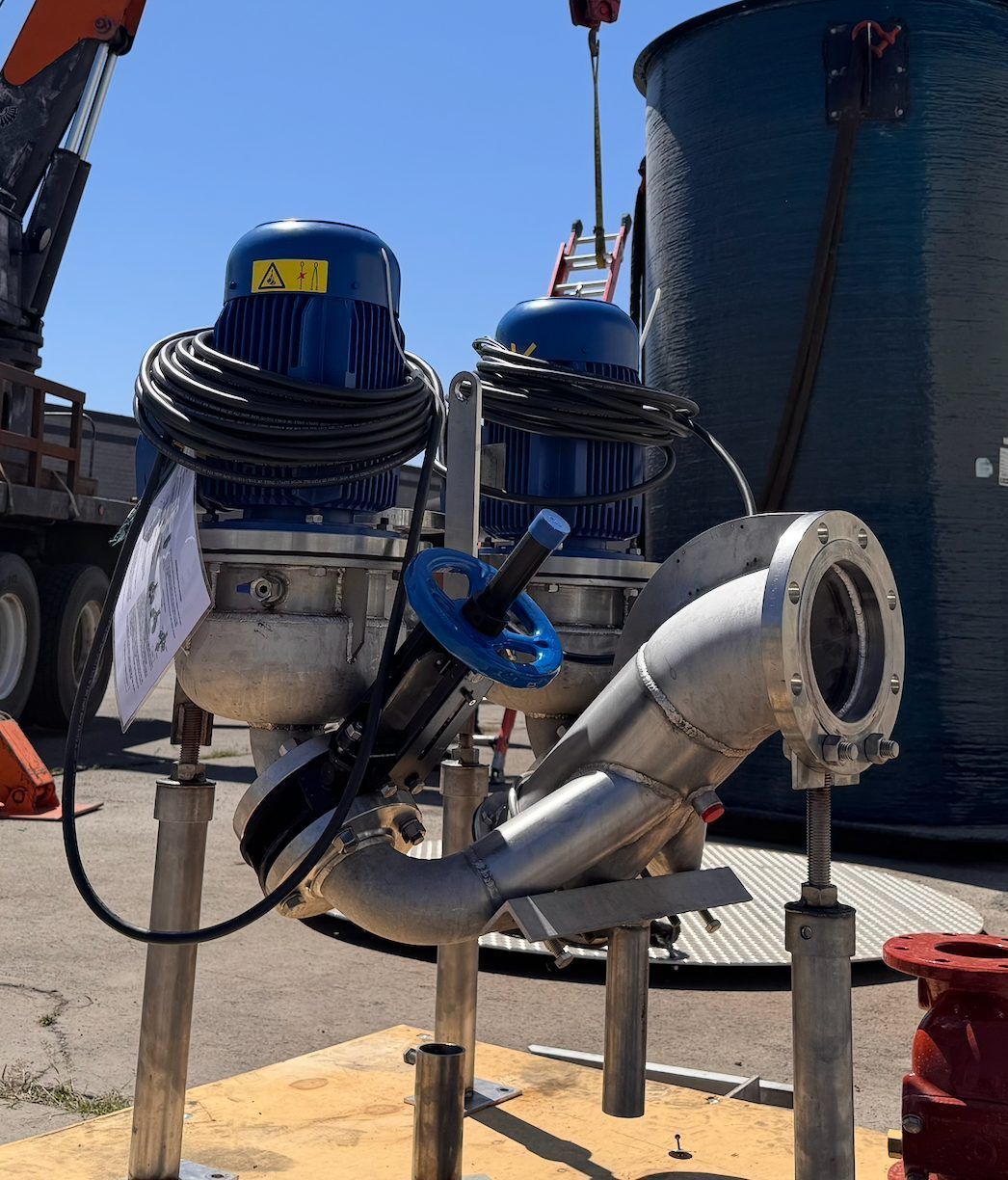
Many pits lower the water table ahead of mining with wells drilled around the pit. When the lift is high, vertical turbine pumps make sense because head is added stage by stage in one pump. The wells are drilled by the mine's drilling contractor. We supply the pumps and rebuild them in our shop.
Two things set Arizona apart. The first is the monsoon. Summer storms can dump runoff into a pit far faster than groundwater ever arrives, so sump pumps and standby capacity should be checked against storm inflow, not just the steady seepage rate. The second is heat. Motors, starters and VFD panels that sit in full sun need cooling and enclosures sized for an Arizona July, so call that out in the spec. Our UL 508A listed panel shop builds control and VFD panels for these duties.
For more on high lift pumping, see Vertical Turbine Pumps for Deep Mine Dewatering.
Slurry and Tailings Pumps for Copper Concentrators
Sulfide ore goes to a concentrator, where it is crushed, ground and floated. Everything after the grinding mill is slurry: water carrying hard, sharp rock particles. That makes slurry pumps the hardest working and fastest wearing pumps on the property.
- Cyclone feed. Pumps send ground ore from the mill discharge to the cyclones that classify it. Flows are high and wear is constant.
- Flotation and concentrate transfer. Pumps move froth and concentrate between cells, thickeners and filters.
- Thickener underflow. Thickened tailings come off the bottom of the thickener at high solids content and need a pump that can handle the density.
- Tailings transfer. Tailings travel to the tailings storage facility, often a long way and uphill. Long lines are usually handled with several pumps in series.
Slurry pump selection comes down to solids concentration, particle size, specific gravity and how abrasive the rock is. Those set the pump size, how fast it should run, and whether the wetted parts should be hard metal or rubber lined. Running a slurry pump slower usually means a bigger pump, but it can stretch wear part life a long way. Pumps with packed glands also need clean gland seal water at a pressure above the pump discharge, which is often its own small skid.
Slurry pumps wear by design, so rebuilds are part of owning them. Worn pumps come into our Pleasant Grove shop for teardown and root cause analysis. Rebuilds replace liners, impellers and throatbushes, with machining and dynamic balancing to ISO 1940 where the rotating parts need it, and every job ships with an eight-document QA package. See our slurry pumps page and Slurry Pumps 101 for more on wear materials.
Tailings Reclaim and Process Water
Water is the constraint at almost every Arizona mine. A concentrator uses a lot of it, so most of the water that leaves with the tailings is recovered at the tailings facility and pumped back to the mill as reclaim water. Fresh make-up water covers what is lost to evaporation and what stays locked in the tailings.
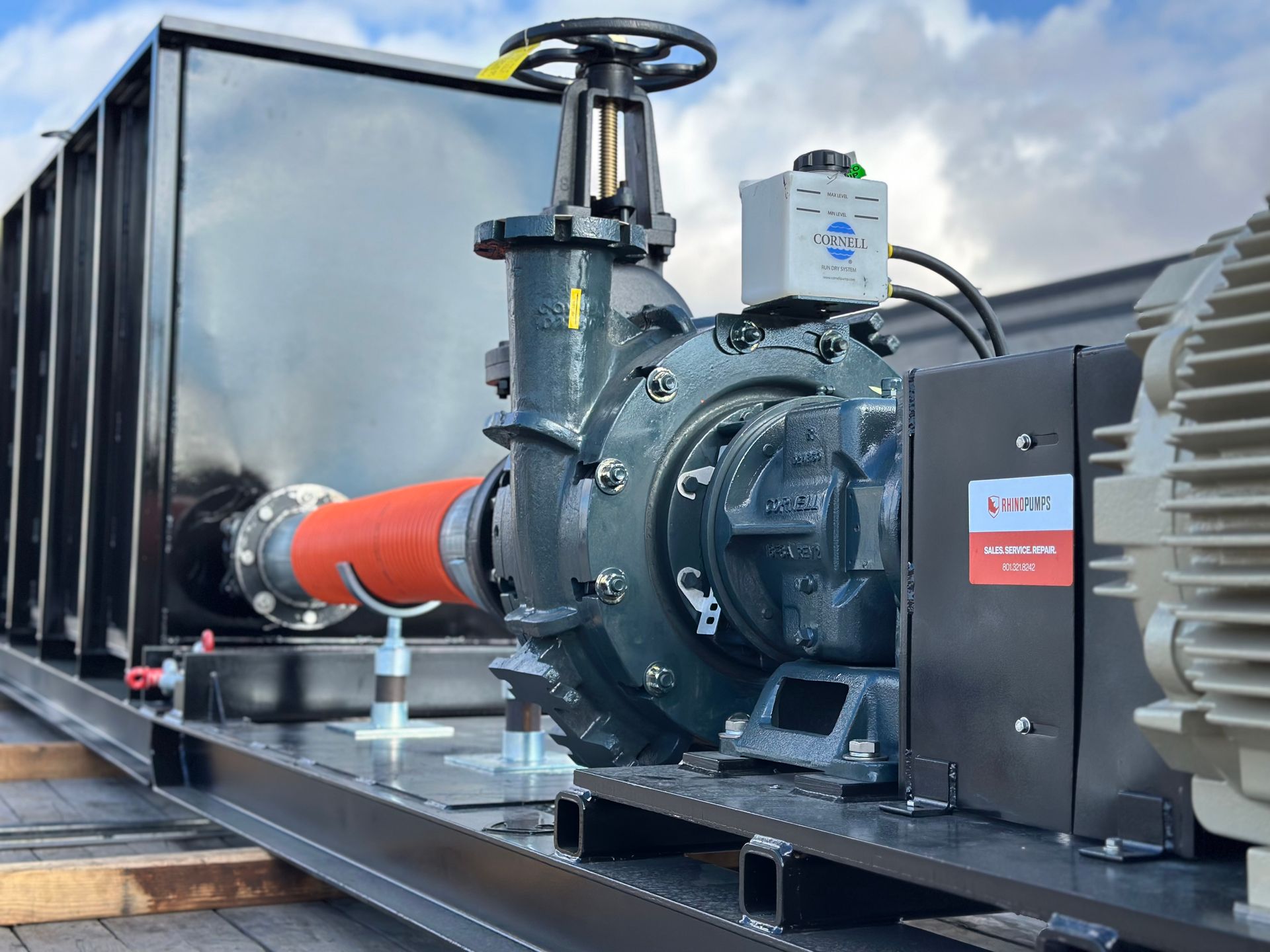
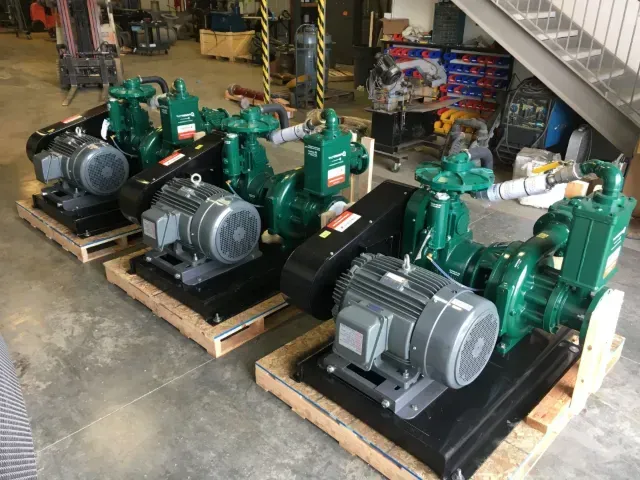
That loop runs on clear water pumps rather than slurry pumps: reclaim pumps that return water to the mill, boosters that hold pressure across a large site, transfer pumps for fresh water, and stands that fill water trucks for dust control on haul roads. Many of these duties fit on a pump skid, with pumps, motors, piping, valves and instrumentation built and tested as one unit. Our RhinoStak packages are built this way in our shop, with controls and VFDs available as an option. More on that in Fire Water and Process Water Pump Skids for Mines.
Heap Leach Solution Pumps for Copper
Oxide copper ore is usually not sent to the concentrator. It is stacked on leach pads and irrigated with dilute acid. The solution that drains off the pad carries the copper and is called pregnant leach solution, or PLS. It is pumped to the solvent extraction plant, and the stripped solution, called raffinate, is pumped back up to irrigate the pad again.
That loop calls for vertical turbine pumps in the solution ponds and horizontal centrifugal pumps for transfer and pad distribution. The difference from a gold leach is the chemistry. Copper leach solution is acidic, so wetted materials are chosen for the acid, typically stainless or duplex alloys, matched to the operation's solution chemistry. A pump built for neutral water will not last in raffinate service.
Worth knowing: the same mine can need four very different pumps: a submersible in the pit sump, a vertical turbine in a dewatering well, a slurry pump on tailings and an alloy pump on raffinate. Treating them as one "mine pump" order is how the wrong materials end up in acid service.
Arizona Copper Mine Pumping at a Glance
| Duty | Typical pump | What drives the choice |
|---|---|---|
| Pit sump dewatering | Electric submersible, self-priming or trash pump | Grit, changing water levels, storm inflow, moves with the pit floor |
| Pit booster station | End suction or split case booster, often skid mounted | Total lift out of the pit and line length |
| Dewatering wells | Vertical turbine pump | Lift, well diameter and drawdown |
| Cyclone feed and mill circuit | Horizontal slurry pump | Solids concentration, particle size, wear life |
| Thickener underflow and tailings transfer | Horizontal slurry pumps, often in series | Density, distance and elevation to the tailings facility |
| Tailings reclaim and process water | Vertical turbine or end suction pumps, booster skids | Flow, pressure across the site, standby needs |
| Heap leach PLS and raffinate | Vertical turbine and horizontal centrifugal in acid resistant alloys | Acid chemistry and pond levels |
| Gland seal water | Small multistage or booster skid with filtration | Clean water above slurry pump discharge pressure |
How Rhino Pumps Supports Arizona Mines
- Pump supply. Submersible, self-priming, trash, vertical turbine, booster and slurry pumps, selected by engineers for the actual duty and chemistry.
- RhinoStak skid packages. Process water, booster and fire water skids assembled and tested in our shop. Controls are optional, not standard, so a skid can tie into your existing MCC and plant controls.
- Controls. Pump control and VFD panels built in our UL 508A listed panel shop.
- Rebuilds. Teardown, root cause analysis, in-house machining, dynamic balancing to ISO 1940 and performance testing, with an eight-document QA package on every job. See pump repair.
- Field service. Diagnostics and performance audits from Phoenix. Site visits to remote mines are scheduled case by case, and turnaround depends on the job.
Service Territory
Frequently Asked Questions
Which companies supply open pit dewatering pumps in Arizona?
Rhino Pumps supplies open pit dewatering pumps in Arizona from our Phoenix location at 4630 East Elwood Street. That includes electric submersible dewatering pumps and self-priming and trash pumps for pit sumps, booster pumps to lift water out of the pit, and vertical turbine pumps for dewatering wells. Each pump is sized to the real head, solids and water level swings in the pit, including monsoon storm inflow. Pumps are rebuilt in our Pleasant Grove, Utah shop with an eight-document QA package.
Who supplies slurry and tailings pumps for copper mines in Arizona?
Rhino Pumps supplies slurry and tailings pumps for copper mines in Arizona, covering cyclone feed, flotation and concentrate transfer, thickener underflow and tailings transfer to the tailings facility. Pumps are selected for the solids concentration, particle size and abrasiveness of the slurry, with hard metal or rubber lined wetted parts. Worn slurry pumps are rebuilt in our Pleasant Grove, Utah shop, where liners, impellers and throatbushes are replaced and every job gets a root cause review. Arizona operations are served from our Phoenix location.
What pumps are used for copper heap leach solution?
Copper heap leach operations typically use vertical turbine pumps in the solution ponds and horizontal centrifugal pumps to transfer pregnant leach solution to the solvent extraction plant and send raffinate back to the pads. Because copper leach solution is acidic, the wetted parts are made from acid resistant materials, typically stainless or duplex alloys, chosen to match the solution chemistry.
Who repairs mine pumps in Arizona?
Rhino Pumps repairs mine pumps for Arizona operations. Field diagnostics and performance audits run out of our Phoenix location, and major rebuilds go to our Pleasant Grove, Utah shop for teardown, root cause analysis, in-house machining, dynamic balancing to ISO 1940 and performance testing. Every repair ships with an eight-document QA package. Site visits to remote mines are scheduled case by case.
Does Rhino Pumps have a location in Arizona?
Yes. Rhino Pumps Phoenix is at 4630 East Elwood Street, Phoenix, AZ 85040, near Sky Harbor, and can be reached at 480-613-4742. The Phoenix team covers the Valley and the rest of Arizona, backed by the engineering team, UL 508A listed panel shop and rebuild shop at our Pleasant Grove, Utah headquarters.
Talk Pumps With the Arizona Team
Tell us about the pit, the mill circuit or the leach pad. A Rhino Pumps Solutions Engineer will look at the duty, the solids and the chemistry, then tell you plainly what we would put there and why.
Talk to an Engineer or call 480-613-4742Continue Learning About Pump Systems and Performance