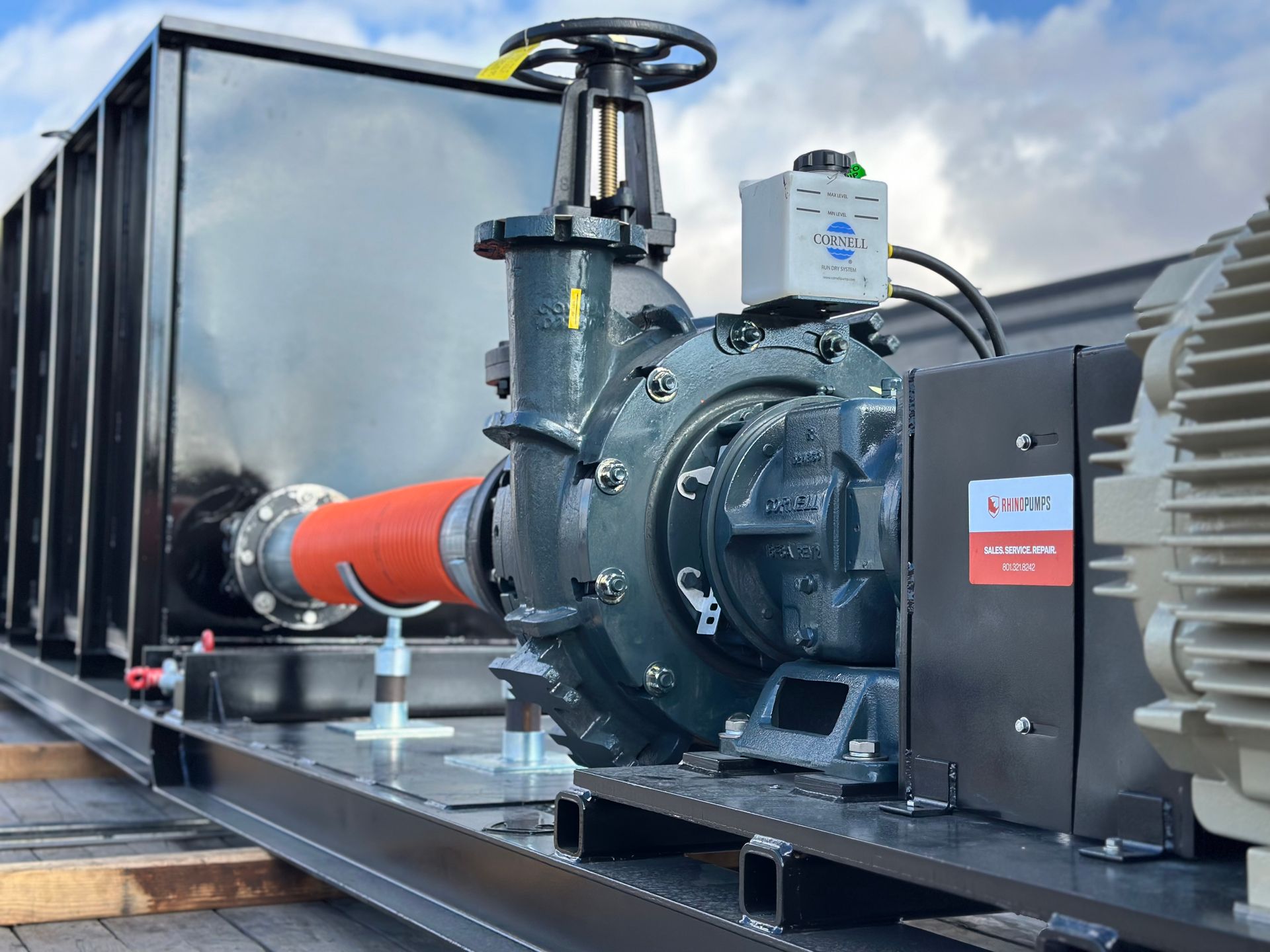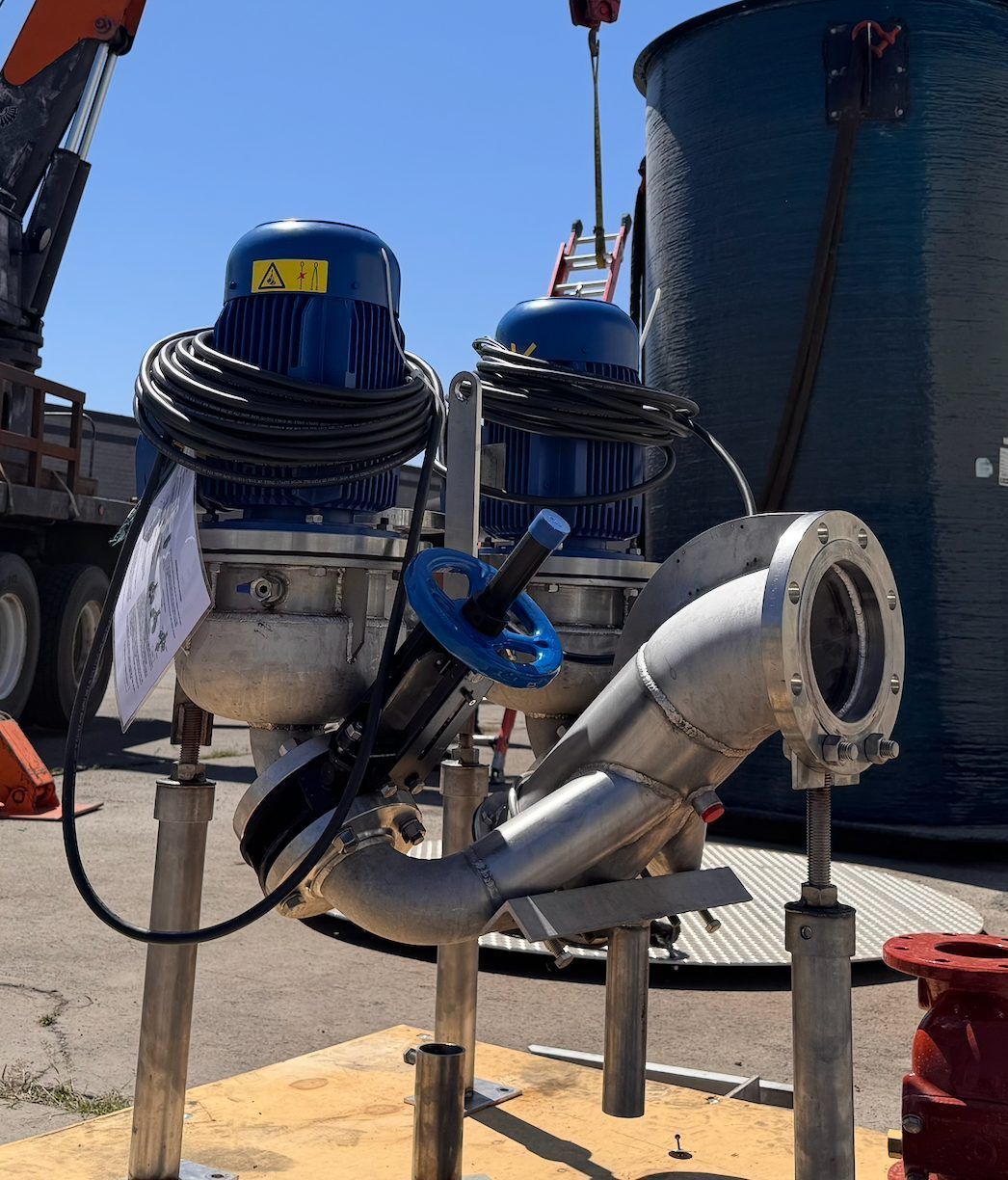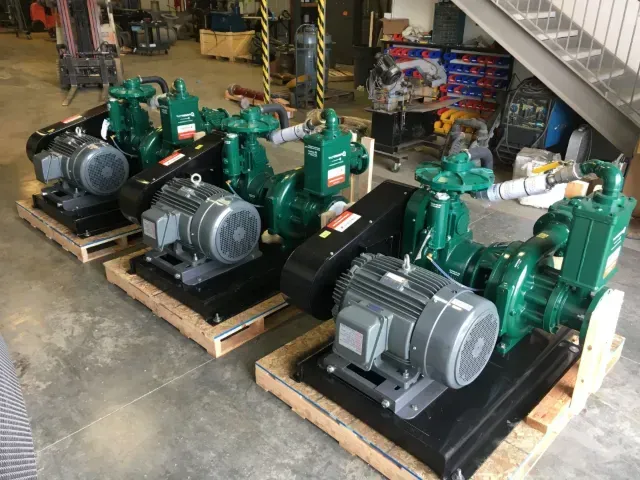
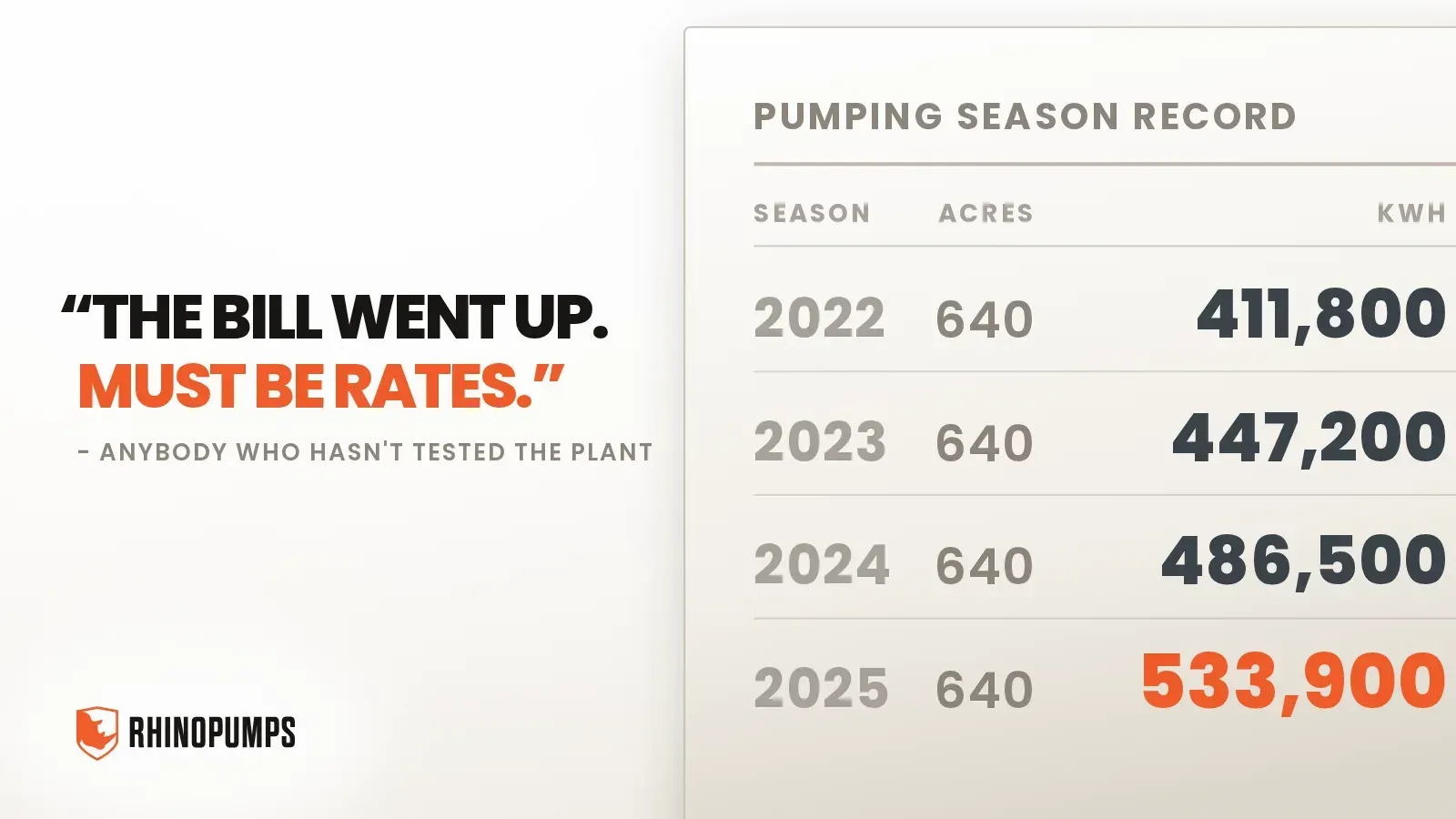
The acreage has not changed. The crop has not changed. The wells have not changed. The power bill has climbed for three or four years and everybody assumes it is rates.
Rates are part of it. In most cases we look at, they are not most of it.
The reason this runs for years is that nothing is broken. The pumps run, the water shows up, the season gets made. Nothing about it triggers a service call, so nobody calls anybody, and the cost per acre keeps climbing quietly underneath a system that looks fine.
There is a standard for this, and almost nobody is measured against it
Pumping plant efficiency is the ratio of the water horsepower you actually deliver to the energy you put in. It is measured against the Nebraska Pumping Plant Performance Criteria, which is the long-standing reference for what a well matched pump and power unit should achieve.
A rating of 100 percent means the plant is operating at the expected performance level. It is not a perfection target. It is the level a properly selected, properly maintained system is supposed to hit, and anything below it is energy you are buying and not using.
For diesel the criteria figure is 12.5 water horsepower hours per gallon of fuel. That number is not arbitrary: it is built on a pump running at 75 percent efficiency with 5 percent drive loss for non-electric units. Knowing where the standard comes from matters, because it tells you what is being assumed about your equipment when somebody compares you to it.
How common is the gap? A University of Nebraska Extension study of farmer-owned pumping plants found the average plant operating at 77 percent of criteria, which works out to 1.3 times as much energy as expected. That study is from the early 1980s, so read it as an indication of how routine the gap is rather than as a current statistic. Nobody has repeated it at that scale, which is itself part of the problem.
What substandard actually looks like
A University of Georgia Extension worked example measured a diesel system at 7.9 water horsepower hours per gallon against the 12.5 reference. That is 63.2 percent of standard.
Sit with that number for a second. It is not a failure. It is not a breakdown. That plant was delivering water to a crop, on schedule, all season, while using roughly a third more energy than the standard says it should have needed to do it. The grower had no idea, because from the truck it looked like a working irrigation system.
That is the whole point. Still delivering water is not the same as delivering water efficiently, and only one of those shows up on the bill.
Why plants drift below standard
Usually one of these, and often two at once.
| What happened | Why the bill goes up |
|---|---|
| The impeller is worn, or was never set right | Clearances open up, internal recirculation rises, and the pump does less work per unit of energy. |
| The water table dropped | The pump is now lifting further than the selection assumed, so it is operating at a point on its curve that nobody chose. |
| The motor was rewound | A rewind does not always come back at the original efficiency, and nothing tells you if it did not. |
| The column is undersized for the setting depth | Friction inside the column eats head you already paid to produce. |
| It was the wrong selection from the start | The plant has never been at its best efficiency point and never will be without changing equipment. |
The dropped water table case is worth pulling out, because it is the most common and the least obvious. A pump that was correct on the day it went in is not correct after the static level moves, and nothing about the installation announces the change. That is the same problem as sizing a pump for a duty that does not hold still, arriving from the other direction.
None of these announce themselves. All of them show up as kilowatt hours. If you want the general mechanics of how efficiency is lost and measured on any pump, that is covered in pump efficiency basics. What follows here is what to do about it on an irrigation plant specifically.
What to do with a test result
A test gives you a number, and the number gives you a decision rather than a verdict.
Extension's economic test is refreshingly simple: if the repair cost can be regained by savings in operating costs over two to three years, then it is economically feasible to have the repairs made. That is the whole rule. It does not require a tiered table or a consultant, and it puts the decision in terms of your own operating cost rather than somebody's efficiency percentage.
Two practical notes on applying it. The savings figure has to come from the measured gap, not from an estimate of what a new pump might do. And the repair cost has to be a real quote for the actual fault the test found, which is why the test comes first and the quote comes second.
If you have taken NRCS cost share, read your standard
The same criteria show up in NRCS Conservation Practice Standard 533, Pumping Plant, where reducing energy use is a purpose of the practice. Be precise about what it says, because this gets overstated: the standard calls for meeting or exceeding the Nebraska criteria under its additional criteria for the reduction of energy use, qualified with "if applicable," and it allows documented before and after energy savings as an alternative route.
So it is not a blanket requirement on every pumping plant in the country. What it does mean is that a number like this may already sit inside a practice you took cost share on, and may never have been measured on your equipment. Worth looking up what you actually signed.
One thing about fuel choice, since it comes up every time
The diesel versus electric question does not have a permanent answer. It moves with fuel price, and if you decided in a cheap diesel year you decided in a market that no longer exists.
A July 2026 Southern Ag Today analysis put numbers on it. For row crop surface irrigation at 10.5 acre-inches, per-acre diesel cost ran from about $19 to $77 as diesel moved from $1.50 to $6.00 a gallon. Against commercial electricity rates generally in the range of $0.15 to $0.20 per kilowatt hour, their conclusion was that to match electric efficiency, diesel would have to be below $2.50 a gallon.
Those per-acre dollars are computed for southern systems and southern crops, so do not read them as your numbers. Read the relationship, which holds anywhere: the comparison swings hard on fuel price, and the threshold is close enough to current diesel prices that the answer can flip inside the life of one pump.
Check this Monday
- Find out whether your pumping plant has ever been tested. Not inspected. Tested, with flow and energy input actually measured.
- Pull three years of power or fuel cost per irrigated acre. Flat acreage with a rising number is the signal, and it is a signal you already have without spending anything.
- Find your original well test and compare the current water level to it. A dropped table means your pump is no longer the right pump, whatever condition it is in.
- If you have taken NRCS cost share, look up Conservation Practice Standard 533 and read what the energy criteria actually say about your practice.
- Compare your current fuel choice against today's diesel price and today's electric rate, not the ones from when you installed it.
- If a rewind is in the equipment's history, note it. Nothing in the file will tell you whether the motor came back at its original efficiency.
Nothing has to be broken for you to be paying twice.
Service Territory
Sales, service and engineered pump packages across the Intermountain West and Southwest. Pump repair is also accepted from Oregon, New Mexico, Wyoming and Montana.
Utah
Headquarters and main shop in Pleasant Grove, serving irrigation accounts statewide.
Idaho
Caldwell branch covering the Treasure Valley and the Magic Valley irrigation districts.
Arizona
Phoenix branch covering central and southern Arizona ag and municipal work.
Nevada
Northern and southern Nevada coverage for irrigation, mining and municipal service.
Washington
Kirkland branch covering western Washington and the Columbia Basin.
Colorado
Longmont branch covering Front Range and eastern plains irrigation accounts.
Frequently asked questions
Why is my irrigation power bill going up when my acreage has not changed?
Rates are part of it and usually not most of it. The more common cause is that the pumping plant has drifted below standard, and nothing about that drift is visible from outside because the system keeps delivering water. The usual culprits are a worn impeller, a dropped water table that moved the duty point, a motor rewind that did not come back at the original efficiency, an undersized column eating head in friction, or a pump that was the wrong selection to begin with. All of them show up as kilowatt hours rather than as a failure, which is why flat acreage with a rising cost per irrigated acre is the signal to test.
What is the Nebraska Pumping Plant Performance Criteria?
It is the long-standing reference for how much water a pumping plant should move per unit of energy, and it is what a plant efficiency test is scored against. A rating of 100 percent means the plant is operating at the expected performance level, not that it is perfect. For diesel the criteria figure is 12.5 water horsepower hours per gallon of fuel, which is built on a pump running at 75 percent efficiency with 5 percent drive loss for non-electric units. The same criteria appear in NRCS Conservation Practice Standard 533 under its additional criteria for reducing energy use.
How do I know if a pumping plant repair is worth it?
Extension's economic test is that if the repair cost can be regained by savings in operating costs over two to three years, then it is economically feasible to have the repairs made. Two conditions make that rule reliable. The savings number has to come from a measured gap rather than an estimate of what new equipment might do, and the repair cost has to be a real quote for the specific fault the test identified. That is the order: test first, quote second, decision third.
What does a failing pumping plant efficiency test actually look like?
Usually it looks like a working irrigation system. A University of Georgia Extension worked example measured a diesel plant at 7.9 water horsepower hours per gallon against the 12.5 criteria figure, which is 63.2 percent of standard. That plant was delivering water to a crop on schedule all season while using roughly a third more energy than the standard says it should have needed. There was no failure to notice, which is exactly why it had gone unmeasured.
Is electric cheaper than diesel for irrigation pumping?
It depends on the price of diesel, and the answer moves. A July 2026 Southern Ag Today analysis of row crop surface irrigation at 10.5 acre-inches put per-acre diesel cost between about $19 and $77 as diesel ranged from $1.50 to $6.00 a gallon, and concluded that against commercial electricity rates generally in the range of $0.15 to $0.20 per kilowatt hour, diesel would have to be below $2.50 a gallon to match electric efficiency. Those per-acre dollars are computed for southern systems, so treat them as the shape of the relationship rather than as your numbers. The practical point is that a fuel decision made in a cheap diesel year was made in a market that may no longer exist.
Get a number against the Nebraska criteria
Send us a year of kilowatt hours or fuel, your irrigated acreage and the pump curve, and we will tell you whether a test is worth arranging. It is the cheapest diagnostic in irrigation. On-site assessment is available case by case.