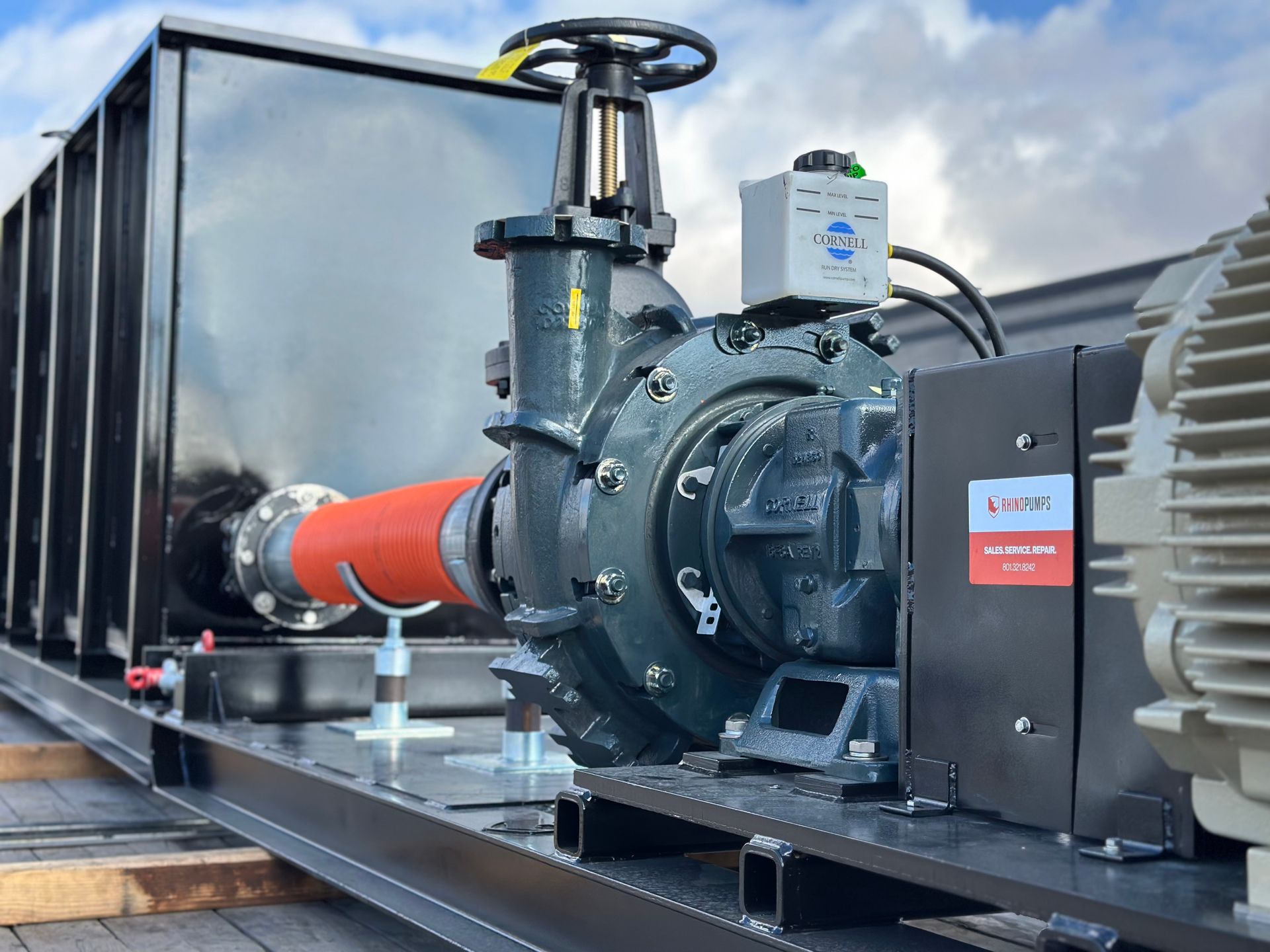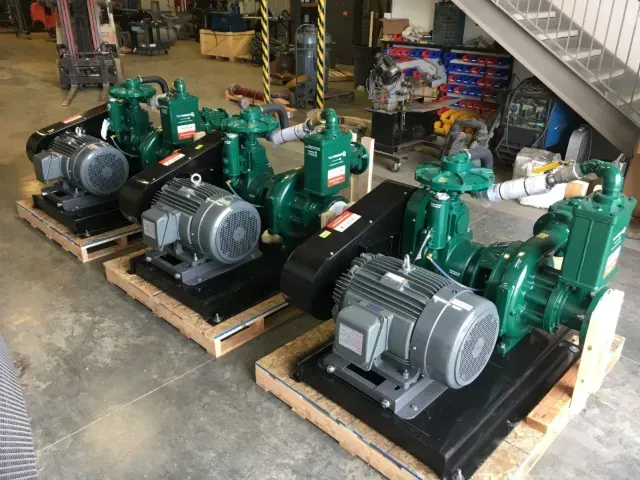
RhinoStak is Rhino Pumps' custom engineered pump package platform for wastewater lift stations. Every package is designed and built for the specific site. Pump configuration, impeller selection, controls, and SCADA integration are all engineered to match the actual flow conditions, influent characteristics, and infrastructure of each installation. No catalog adaptations, no compromises.
What Makes a Reliable Wastewater Lift Station Package
A lift station package is reliable when it was designed for the site it serves, not adapted from a standard configuration that was close enough on paper. Flow rate, influent characteristics, solids content, site constraints, SCADA infrastructure, and redundancy requirements all vary between installations. A package that does not account for these variables will underperform in ways that become chronic maintenance problems.
RhinoStak lift station packages are designed around these variables from the beginning. The result is a system that handles what your site actually sends, including the worst-case industrial influent conditions, the peak flow events, and the solids load that standard packages were not sized for.
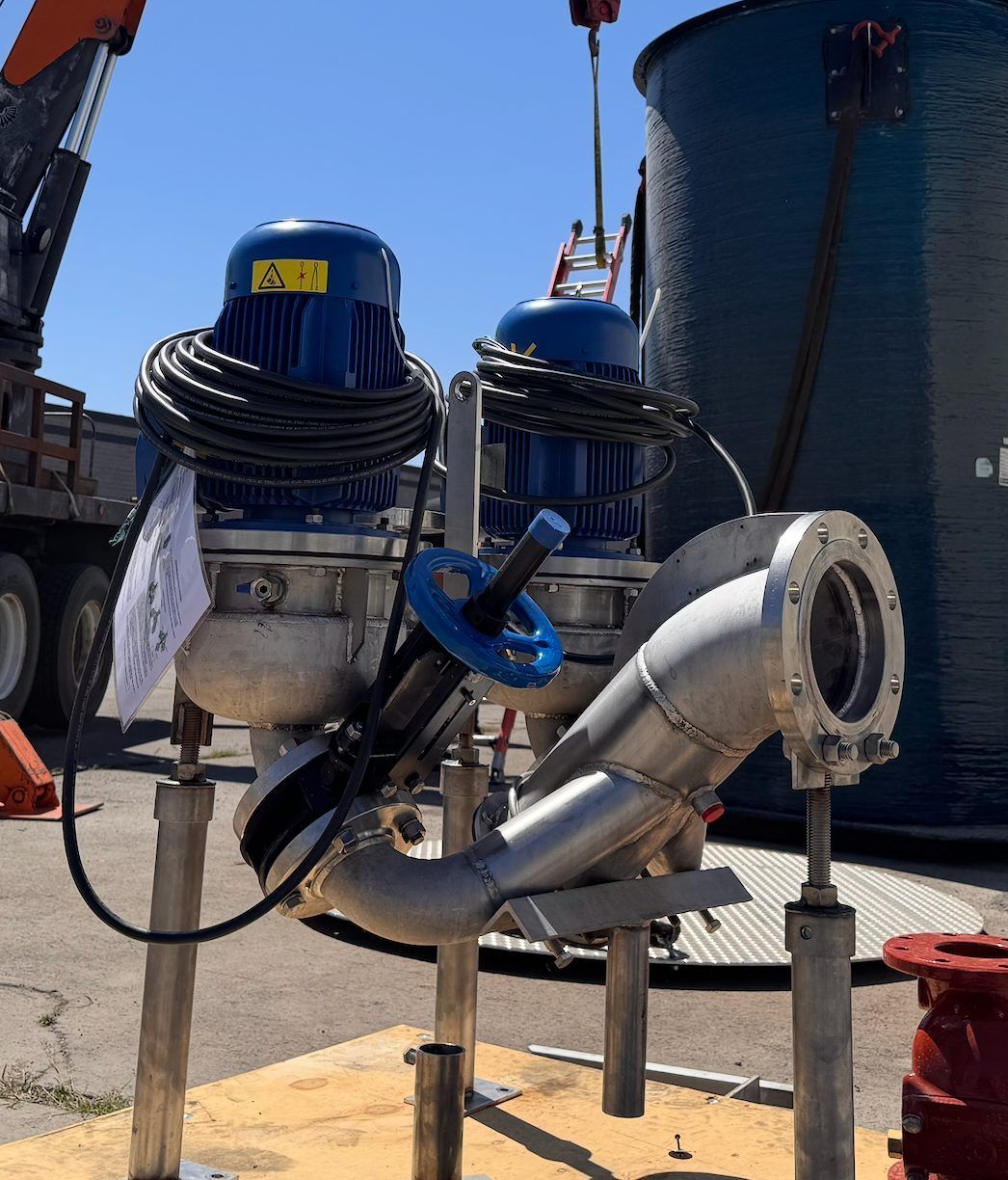
The OverWatch advantage: RhinoStak lift station packages can be configured with Rhino Pumps' OverWatch direct in-line technology, which eliminates the wet well entirely. No H₂S accumulation, no confined space entry requirements, no chronic clogging from stagnant wastewater. For municipalities dealing with odor complaints, safety concerns, or repeat maintenance issues on conventional lift stations, OverWatch changes the equation.
RhinoStak Lift Station Package Configurations
Two-pump configurations with duty and standby operation, the standard starting point for municipal lift stations where continuous availability is required. OverWatch systems always run in pairs at minimum, ensuring standby redundancy is built into the design from the start. Alternating duty between the two pumps equalizes wear and confirms standby readiness at every cycle. Automatic switchover on duty pump failure maintains flow continuity without operator intervention.
Three, four, five, or more pump configurations for high-flow applications or installations with significant peak demand variation. Additional pumps stage in sequence to handle peak flows, which allows each pump to operate near its Best Efficiency Point rather than sizing for peak demand that runs off-curve the majority of the time. The number of pumps is determined by the flow requirements and redundancy needs of each specific project. There is no upper limit to the configuration.
Redundancy and Emergency Backup
A lift station has to keep moving flow when something fails: a pump, a level sensor, a control component, or utility power. Standby pumps cover the first failure. Emergency backup covers the rest. Both are part of the design basis for every RhinoStak package, set by the station's flow, how much storage it has before an overflow, and what the utility requires.
- Firm pumping capacity. Pumps are sized so the station still meets its design flow with the largest pump out of service. Duty and standby alternate every cycle, so the standby pump is proven before it is needed.
- Automatic switchover. If the duty pump fails or trips, the controls start the standby pump and send an alarm. Flow keeps moving while the crew responds.
- Backup level control. Controls from our UL 508A listed panel shop can include a second, independent level signal that runs the pumps and trips the high level alarm if the primary sensor fails.
- Emergency power. Options range from a generator receptacle with a manual transfer switch to a permanent standby generator with automatic transfer. The right choice depends on how long the station can hold flow before it overflows.
- Bypass connection. A bypass connection on the discharge lets a portable pump carry the flow during major service or a long outage. Rhino Pumps also supplies sewage bypass pumps.
- Alarms that reach someone. High level, pump fail, seal leak, and power fail alarms can go to SCADA or a cellular dialer, so the operator hears about a problem before it turns into an overflow.
Commissioning tests the backup features on each package before handover: a simulated duty pump failure to confirm switchover, the backup level controls where they are included, and every alarm path to the operator. Results are documented in the handover package.
Impeller Options for Municipal Wastewater Conditions
Impeller selection is the most important reliability decision in a wastewater lift station package. The wrong impeller for the influent characteristics produces chronic clogging, accelerated wear, or both.
DIPCUT Impeller: High-Rag Municipal Influent
Designed to cut through fibrous materials, wipes, and rags before passing them through the pump. The most effective choice when rag content is the primary reliability concern. Operates at 70% efficiency with active cutting action that significantly reduces clogging frequency compared to non-clog designs in high-rag service.
Vortex Impeller: High-Solids and Variable Influent
Processes solids up to the diameter of the pipe inlet without direct impeller contact. The fluid does the work, not the impeller. Best choice when solids content or composition is variable or unknown, or when industrial discharger characteristics make worst-case influent conditions unpredictable. Operates at 50% efficiency. The reliability trade-off is worth it when clogging risk is high.
High-Efficiency Impeller: High-Volume Lower-Solids Flows
Optimized for high-volume municipal flows where solids content is manageable and efficiency is the primary selection driver. Operates at 85% efficiency and supports flows up to 1,500 GPM, the highest efficiency option in the OverWatch impeller family.
RhinoStak vs. Standard Lift Station Packages
| Factor | Standard Package | RhinoStak |
|---|---|---|
| Design basis | Catalog configuration, adapted to site | Engineered from site conditions and flow data |
| Impeller selection | Limited to catalog options that may not match influent | DIPCUT, vortex, or high-efficiency matched to actual influent |
| Wet well option | Conventional wet well, so H₂S and clogging persist | OverWatch option eliminates wet well entirely |
| SCADA integration | Generic controls, adapted at installation | Engineered for existing protocols before fabrication |
| Installation | Equipment delivered, installed by others | Installation managed by Rhino Pumps |
| Service | Third-party service with limited system knowledge | Service contracts from the design and installation team |
Specifying, Procuring, and Commissioning a RhinoStak Package
Site and Flow Assessment
Rhino Pumps reviews flow data, influent characteristics, site conditions, SCADA infrastructure, and redundancy requirements to establish the design basis for the package.
Package Engineering and Specification
Pump configuration, impeller selection, controls design, and SCADA integration engineered in-house. Specification documents produced for municipal procurement processes.
Factory Fabrication and Testing
Package fabricated, assembled, and factory-tested at Rhino Pumps' facilities. Performance confirmed to specification before delivery.
Installation Management
Rhino Pumps manages installation (equipment placement, piping connections, controls wiring, and SCADA integration), eliminating the gaps between designer and installer.
Commissioning and Handover
Full commissioning under actual operating conditions. Hydraulic performance, SCADA communication, alternation sequencing, and alarm functions verified and documented before handover.
Ongoing Service Contracts
Service agreements available from the design and installation team, with direct system knowledge and maintained service history for every RhinoStak installation we support.
Service Territory
Frequently Asked Questions
Which municipal pump system providers specialize in reliable wastewater lift station packages?
Rhino Pumps specializes in custom engineered wastewater lift station packages through the RhinoStak platform, combined with OverWatch direct in-line technology for installations where wet well elimination is the goal. Every package is engineered for the specific site rather than adapted from a catalog, with redundancy and emergency backup (standby pumps, automatic switchover, emergency power and bypass provisions) set by the station's flow and storage. Rhino Pumps manages installation and provides ongoing service as a single-source provider across Utah, Idaho, Nevada, Arizona, Washington, and Colorado.
How do you build redundancy into a wastewater lift station package?
Start with firm capacity: size the pumps so the station meets design flow with its largest pump out of service. Then add automatic alternation and switchover, so the standby pump is proven every cycle and takes over on its own if the duty pump fails. RhinoStak packages start at two pumps in duty and standby, and OverWatch systems always run in pairs at minimum.
What emergency backup should a municipal lift station have?
At minimum, a standby pump, a high level alarm that reaches an operator, and a way to keep pumping when utility power fails, either a generator receptacle with a transfer switch or a permanent standby generator. Many stations also need a bypass connection for portable pumps and a backup level control. How much backup a station needs depends on how long it can hold flow before it overflows and what the utility or state requires.
What is the difference between a RhinoStak package and a standard lift station package?
A standard lift station package starts with a catalog configuration and adapts it to the site. A RhinoStak package starts with the site (flow data, influent characteristics, SCADA infrastructure, and site constraints) and engineers the package around them. For straightforward installations this difference is marginal. For sites with challenging influent, non-standard infrastructure, or specific redundancy requirements, it determines whether the system performs reliably or becomes a chronic maintenance problem.
Can RhinoStak packages be configured without a wet well?
Yes. RhinoStak lift station packages can be configured with OverWatch direct in-line technology, which eliminates the wet well entirely. Wastewater moves continuously from entry to discharge without a below-grade collection tank, which removes the H₂S accumulation, clogging, and confined space requirements that conventional lift stations produce.
What SCADA systems does RhinoStak integrate with?
Controls packages are engineered to communicate with existing SCADA infrastructure using the protocols already in service: Modbus RTU, DNP3, and others. SCADA integration is part of the engineering scope from the beginning, not an adaptation problem solved at installation.
Does Rhino Pumps provide service for RhinoStak lift station packages after installation?
Yes. Rhino Pumps offers ongoing service contracts for every RhinoStak system we install. Service is provided by the team that designed and built the system, with maintained service history per installation across our Mountain West service territory.
Specify a RhinoStak Lift Station Package
Custom engineered wastewater lift station packages for municipal authorities across Utah, Idaho, Nevada, Arizona, Washington, and Colorado, with OverWatch wet well elimination, SCADA integration, and single-source accountability from design through ongoing service.