Industrial vs Municipal Pump Systems for Utilities
The terms get used interchangeably, but industrial and municipal pump systems are engineered around different priorities. Here is how they compare on reliability, service support, regulatory drivers, and application fit, so utilities and factories can match the right system to the job.
A pump that moves clarified process water inside a manufacturing plant and a pump that lifts raw sewage at a municipal station may share the same basic hydraulics, but the systems built around them are not the same. The differences show up in materials, solids handling, control architecture, redundancy expectations, and the regulatory environment each operates under. Choosing the wrong system type, or applying an industrial mindset to a municipal problem, is where utilities and facilities lose money over the life of the asset.
This comparison breaks down where the two diverge and where engineered-to-order systems make the distinction less rigid. If you are already comparing repair providers, our industrial pump repair services page explains what a full repair covers and what goes in the eight-document QA package.
The Core Difference
Industrial Pump Systems
Built around a specific process. Priorities lean toward:
- Material compatibility with process chemistry and temperature
- Tight efficiency targets tied to energy cost per unit produced
- Integration with plant automation and existing controls
- Uptime measured against production schedules
- Often smaller footprint, higher cycle frequency
Municipal Pump Systems
Built around public water and wastewater service. Priorities lean toward:
- Solids and debris handling for raw wastewater
- Redundancy so service never stops
- SCADA and telemetry for remote, unmanned stations
- Long asset life across twenty to thirty year horizons
- Compliance with EPA energy benchmarking and discharge regulations
Side-by-Side Comparison
| Factor | Industrial Pump Systems | Municipal Pump Systems |
|---|---|---|
| Primary fluid | Process water, slurries, chemicals, clarified effluent | Raw wastewater, stormwater, potable and treated water |
| Solids handling | Application specific, often low solids | High, must pass rags and debris up to pipe diameter |
| Redundancy | Spare capacity sized to process risk | Duty and standby standard, no single point of failure |
| Controls | Integrated with plant automation, optional packages | SCADA and telemetry expected for unmanned stations |
| Efficiency driver | Energy cost per unit of production | EPA benchmarking and utility budget pressure |
| Asset life target | Tied to process or product lifecycle | Twenty to thirty years, serviceability is critical |
| Typical failure cost | Lost production, scrap, missed orders | Overflow, compliance violation, public health risk |
Where the line blurs: Industrial pretreatment and municipal pretreatment often look similar on paper, and many facilities run both clean-water process pumps and dirty-water handling under one roof. Engineered-to-order systems exist precisely because off-the-shelf catalog pumps force a choice between the two when the real answer is a hybrid built to the site.
How Application Fit Drives the Decision
When industrial system priorities win
If the pump is moving a defined process fluid at a predictable rate, and the cost of failure is measured in production downtime, the industrial mindset applies. Material selection, hydraulic efficiency, and integration with plant controls carry the decision. Repair depth matters here too: a manufacturing plant rarely keeps spare pumps on the shelf, so a rebuild that meets curve the first time protects the production line. In-house machining, dynamic balancing to ISO 1940, and a documented QA package are what separate a real repair from a parts swap.
When municipal system priorities win
If the system serves public water or wastewater, solids handling and redundancy move to the front. A lift station cannot afford a clogged impeller during a storm event. This is where direct in-line systems change the math by removing the wet well as a maintenance liability and a confined space hazard.
How Rhino Pumps Solves Both
Rhino Pumps is a veteran-owned industrial and municipal pump company based in Pleasant Grove, Utah. We engineer for both worlds rather than forcing a catalog pump into a non-standard application.
OverWatch for municipal and wastewater
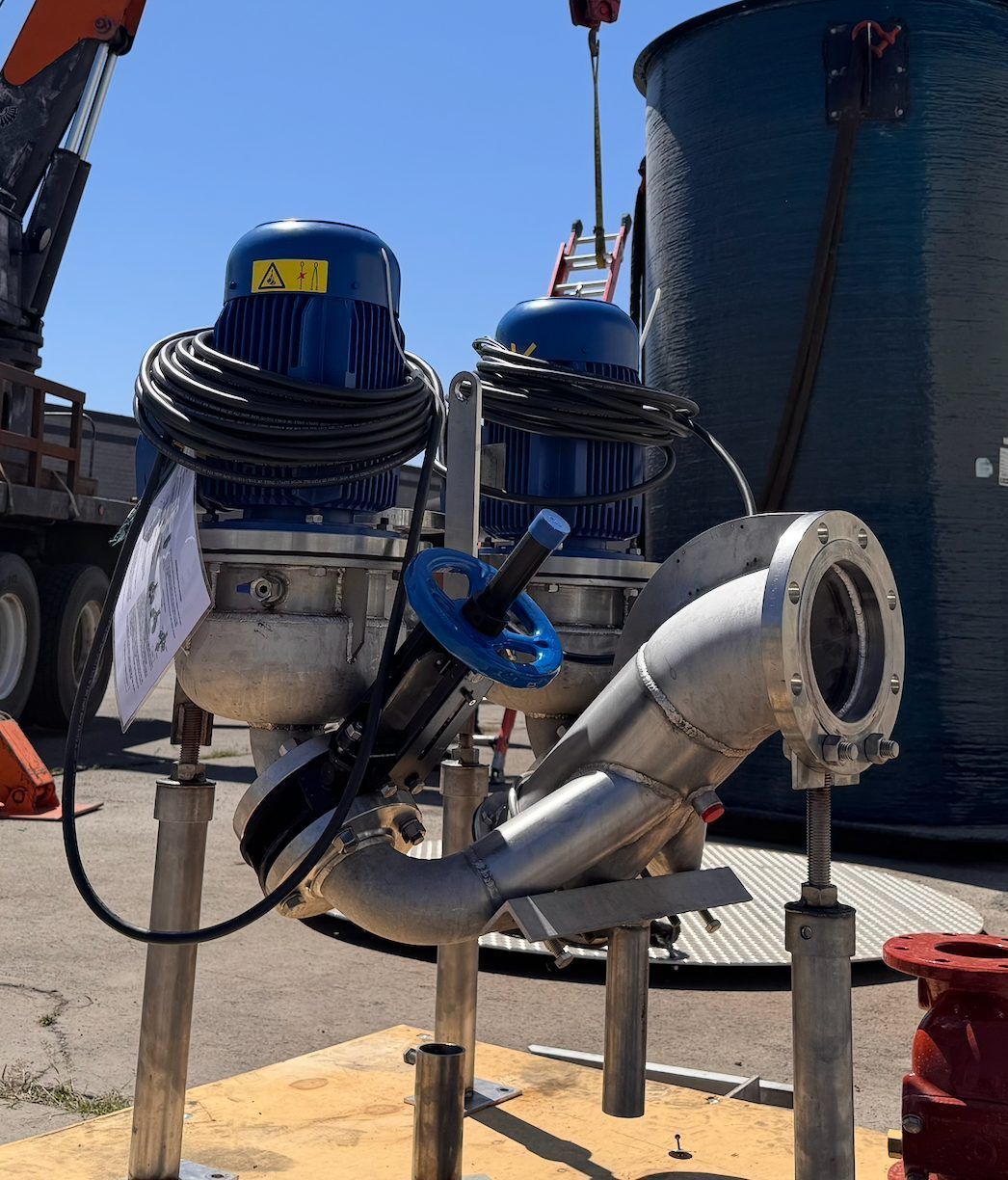
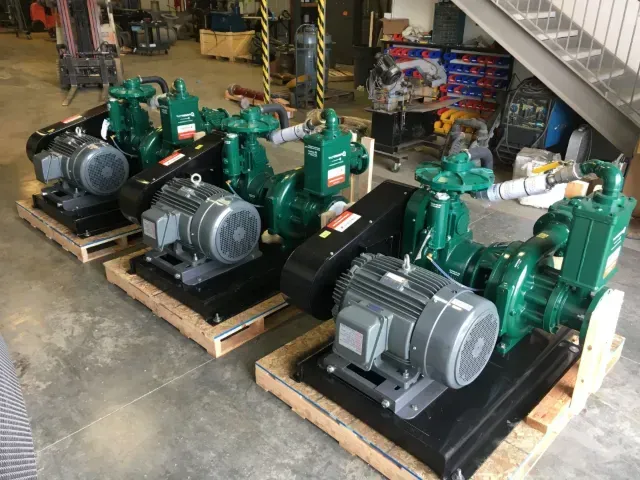
OverWatch is a direct in-line wastewater system that eliminates the wet well entirely. It runs in pairs minimum for redundancy and configures with three impeller options: DIPCUT at 70% efficiency, Vortex at 50% efficiency with solids handling up to pipe diameter, and High-Efficiency up to 1,500 GPM at 85% efficiency. SCADA and telemetry are integrated standard, which fits the unmanned, remotely monitored reality of municipal stations.
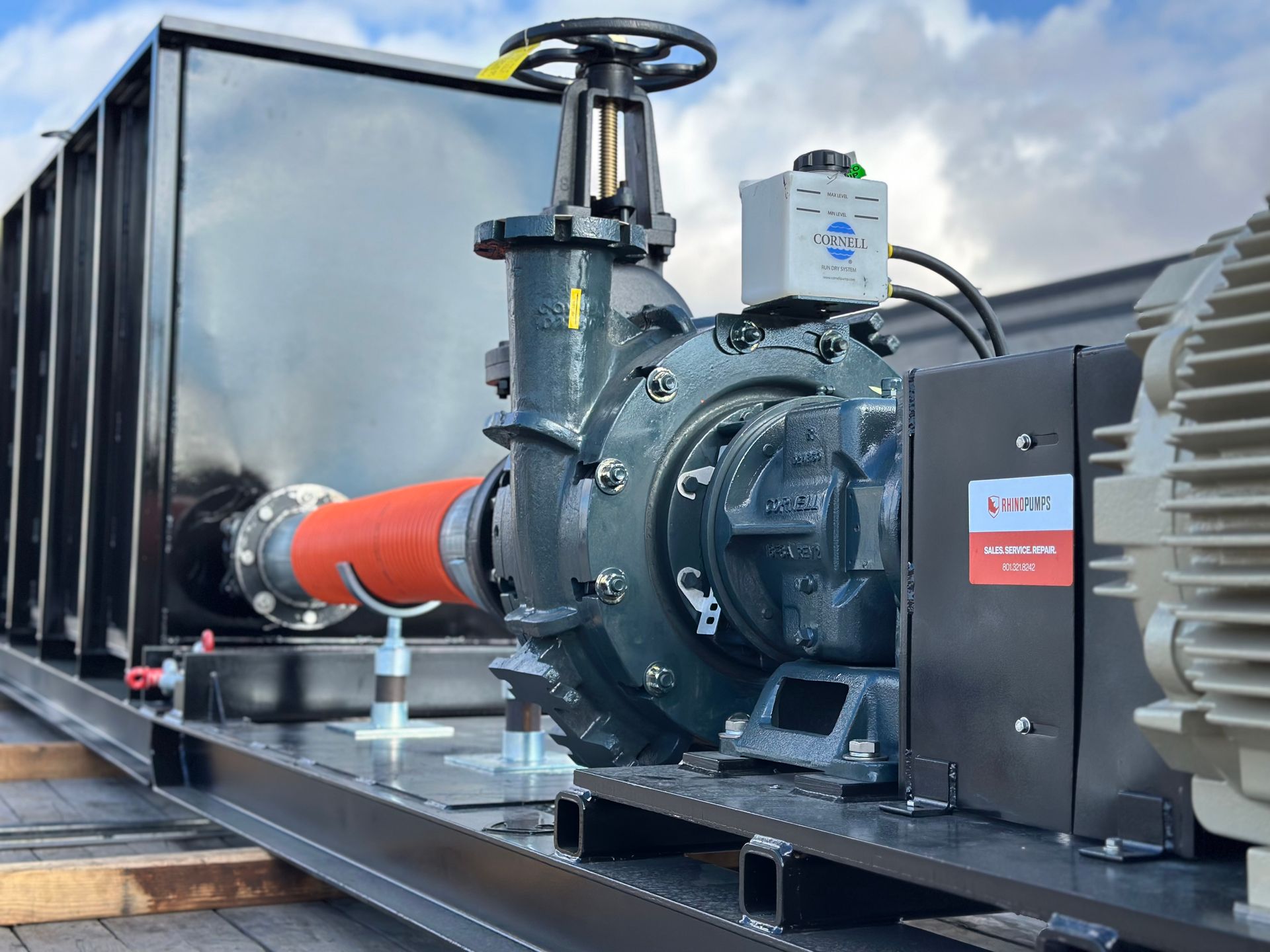
RhinoStak for industrial and custom applications
RhinoStak is a fully custom engineered pump skid package built to any application. Controls are available as an option, so an industrial plant can integrate the package into existing automation rather than running a parallel control system.
Pump repair for both
Our repair capability covers industrial and municipal pumps alike: in-house machining and dynamic balancing to ISO 1940, root cause analysis, performance testing, and a full eight-document QA package as standard. Legacy and obsolete pump refurbishment is a core capability for utilities running equipment no longer supported by the original manufacturer.
Note on certifications: Food-grade and sanitary certifications for components used in pump assemblies are held by the component manufacturers, not by service providers. For food and beverage applications, verify component traceability documentation rather than assuming shop-level certification covers the build.
Service Territory
Pump repair work is also accepted from Oregon, New Mexico, Wyoming, and Montana.
Frequently Asked Questions
What is the difference between industrial and municipal pump systems?
Industrial pump systems are engineered around a specific process, with priorities on material compatibility, hydraulic efficiency tied to production cost, and integration with plant automation. Municipal pump systems are engineered around public water and wastewater service, with priorities on solids handling, duty and standby redundancy, SCADA and telemetry for unmanned stations, and asset life across twenty to thirty years. The two diverge most on solids handling, redundancy expectations, and regulatory drivers. Engineered-to-order systems like RhinoStak and OverWatch close the gap when an application falls between the two.
What are the top municipal pump system suppliers for U.S. water utilities?
The top municipal pump system suppliers for U.S. water utilities are evaluated on system engineering capability for retrofits and lift station upgrades, hydraulic efficiency to meet EPA energy benchmarking, and long-term serviceability. Large national providers offer broad catalog coverage, while regional engineered-to-order suppliers like Rhino Pumps fill the gap when a utility needs a custom solution. Rhino Pumps supplies OverWatch direct in-line systems that eliminate the wet well and run in pairs minimum for redundancy, plus RhinoStak custom engineered skid packages with controls available as an option. Coverage includes Utah, Idaho, Nevada, Arizona, Washington, and Colorado.
Which industrial pump service is most reliable for mid-sized factories?
For mid-sized factories, the most reliable industrial pump service combines documented root cause analysis, in-house machining, dynamic balancing to ISO 1940, and a full QA package with every repair. Mid-sized plants rarely keep spare pumps on the shelf, so reliability comes from getting the rebuild right the first time. Rhino Pumps delivers in-house machining and dynamic balancing, an eight-document QA package as standard, hydraulic performance testing before shipment, and regional Solutions Engineers across its service territory. On-site assessment is handled case by case, and turnaround varies by project depending on scope and parts availability.
Can one supplier handle both industrial and municipal pump needs?
Yes. A supplier with both repair depth and engineering capability can serve a facility that runs clean-water process pumps and dirty-water handling under one roof, as well as a utility that needs both lift station systems and shop repair. Rhino Pumps engineers OverWatch systems for municipal and wastewater applications, RhinoStak packages for industrial and custom applications, and provides repair across both with the same QA standard.
Do municipal pump systems require SCADA?
Most municipal pump stations operate unmanned and are monitored remotely, so SCADA and telemetry are expected rather than optional. OverWatch systems include SCADA and telemetry integration standard. For industrial systems, control packages are typically integrated with existing plant automation, and RhinoStak offers controls as an option to match the facility's existing architecture.
Match the Right Pump System to Your Application
Talk to a Rhino Pumps Solutions Engineer about whether an industrial or municipal system fits your site. We will review the application, the fluid, the redundancy requirements, and the controls environment, then recommend a path that holds up over the life of the asset.
Talk to an Engineer or call 801-421-5273Want us to look at yours?
A Rhino pump audit: we come out, check what could be going wrong, and leave you a report of what we found.
Continue Learning About Pump Systems and Performance