On a municipal water or wastewater retrofit, the specification you write determines the system you get. A spec that is too loose lets unqualified equipment win on price alone. A spec written around a single catalog product locks out competition and invites a protest. This guide walks municipal engineers and procurement teams through what belongs in a defensible pump specification, the mistakes that cost facilities for decades, and how to write requirements that get you the right system at a fair price.
The spec is the project: Equipment is selected to meet the specification, so every gap in the spec becomes a gap in the installed system. The time to engineer a retrofit is during specification writing, not during commissioning when the equipment is already on site.
What Belongs in a Municipal Pump Retrofit Specification
A complete specification covers far more than flow and head. For a retrofit, where the new equipment has to live inside existing infrastructure, the specification has to define the interfaces as carefully as the equipment itself.
Hydraulic Requirements
Design flow and head at the actual current system curve, not the original design point. Include minimum, normal, and peak operating conditions and the required operating point relative to Best Efficiency Point.
Site and Interface Conditions
Existing piping sizes, flange ratings, materials, available footprint, and access constraints. Define the physical envelope the equipment must fit inside.
Controls and SCADA
The existing SCADA platform and communication protocol the new controls must integrate with. Specify the protocol by name so bidders cannot assume a costly system upgrade is in scope.
Materials of Construction
Wetted materials specified for the actual fluid, including solids content and chemistry. Avoid generic material callouts that do not account for the service conditions.
Redundancy and Reliability
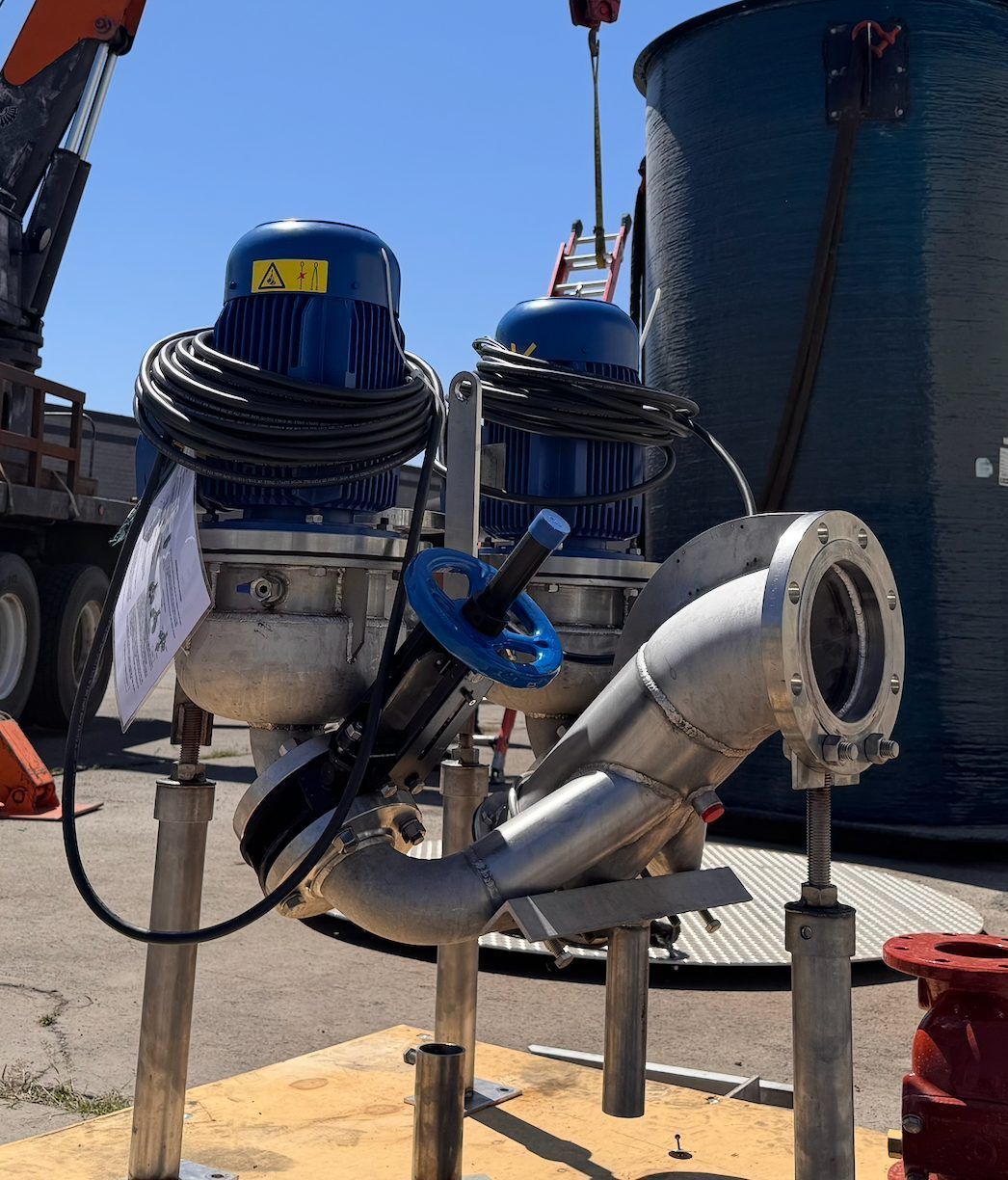
Duty and standby configuration requirements. For direct in-line wastewater systems, redundancy should be specified as a minimum of two units so a single failure never takes the station offline.
Testing and Documentation
Factory performance testing against the pump curve, commissioning validation requirements, and the documentation package to be delivered at handover. Define what proof of performance you require.
Common Specification Mistakes
Most retrofit problems trace back to the specification. These are the recurring mistakes that cost municipalities in performance, energy, and rework.
Specifying the old design point
Writing the spec around the flow and head of the original equipment, when demand growth and pipe changes have shifted the actual system curve. The new pump inherits the same mismatch.
Leaving SCADA undefined
Omitting the existing protocol, so integration becomes an unplanned change order discovered at installation rather than a priced requirement in the bid.
Writing to one product
Copying a single manufacturer's cut sheet into the spec. This invites a bid protest and removes the engineering judgment a retrofit actually needs.
No performance proof required
Failing to require factory testing or commissioning validation, so there is no contractual basis to reject equipment that does not meet the curve.
Price-only evaluation
Evaluating on equipment cost alone, ignoring installation, integration, energy, and lifecycle service that determine the real cost of ownership.
Ignoring the footprint
Not defining the existing space and access envelope, so a technically compliant pump arrives that cannot be installed or maintained without modifying the structure.
Performance, Controls, and Documentation Requirements
A defensible specification states not only what the equipment must do, but how performance will be proven and what records will be delivered. Use the categories below as a starting framework.
| Requirement Category | What to Specify |
|---|---|
| Hydraulic performance | Operating point on the current system curve, efficiency at duty, and acceptable operating range relative to Best Efficiency Point. |
| Factory testing | Performance test against the pump curve before shipment, with flow, head, and power measured and documented. |
| Controls and SCADA | Named communication protocol, required data points, alarm conditions, and alternation or lead and lag sequencing. |
| Commissioning | Validation of hydraulic performance, SCADA communication, controls sequencing, and safety functions under actual operating conditions. |
| Documentation handover | As-built drawings, equipment manuals, performance test results, and a commissioning report delivered at project acceptance. |
| Service and support | Parts availability, service coverage, and warranty terms over the expected asset life. |
How Rhino Pumps Supports the Specification Process
Rhino Pumps works with municipal engineers and consulting firms during the specification phase, before a project goes to bid. We provide hydraulic input based on the actual current system curve, sample performance and documentation language, and a basis-of-design reference for the controls and SCADA interface. Our goal is a specification that is complete and competitive, not one written around a single product.
For the engineered solution that meets a well-written retrofit specification, see our custom engineered pump solutions for municipal water retrofits. For the controls side, see our guide to SCADA and controls integration for municipal pump retrofits.
- Hydraulic analysis input based on the current system curve, not the original design assumptions
- Sample specification language for performance, testing, and documentation requirements
- Basis-of-design reference for controls and SCADA integration with existing infrastructure
- Guidance on redundancy and reliability requirements appropriate to the application
- Review of footprint and interface constraints that belong in the specification
Service Territory
Rhino Pumps works with municipal water and wastewater authorities across six states on specification support, retrofit projects, and ongoing service.
Frequently Asked Questions
What should a municipal pump specification include for a retrofit project?
A municipal pump specification for a retrofit should include hydraulic requirements based on the actual current system curve, site and interface conditions such as existing piping and footprint, the SCADA platform and communication protocol the controls must integrate with, materials of construction for the actual fluid, redundancy requirements, and testing and documentation requirements. For direct in-line wastewater systems, redundancy should be specified as a minimum of two units. The specification should define how performance will be proven through factory testing and commissioning validation, not only what the equipment must do.
How do you write an RFP for a pump system retrofit?
Write the RFP around the actual site conditions and current system requirements rather than the original equipment or a single manufacturer's product. Define hydraulic performance at the current system curve, the controls and SCADA interface by named protocol, the physical footprint and piping interfaces, redundancy, factory testing, commissioning validation, and the documentation package required at handover. Evaluate on total cost of ownership including installation, integration, energy, and service, not equipment price alone.
What are common mistakes in municipal pump specifications?
The most common mistakes are specifying the original design point instead of the current system curve, leaving the SCADA protocol undefined so integration becomes an unplanned change order, writing the spec around one manufacturer's product, requiring no performance proof, evaluating on price alone, and ignoring the existing footprint and access envelope. Each of these turns into a performance, cost, or rework problem after the equipment is on site.
Should a municipality let a pump vendor help write the specification?
A municipality can use vendor expertise to inform a specification while keeping the document open and competitive. The useful contribution is technical input such as hydraulic analysis of the current system curve, sample performance and documentation language, and a basis-of-design reference for the controls interface. A specification informed by engineering input but written to performance requirements rather than a single product gives the municipality a complete spec and a fair, competitive bid.
What performance and documentation requirements belong in a pump RFP?
Performance requirements should include the operating point on the current system curve, efficiency at duty, and the acceptable range relative to Best Efficiency Point, proven by a factory performance test before shipment. Documentation requirements should include as-built drawings, equipment manuals, factory test results, and a commissioning report delivered at project acceptance, plus defined service, parts, and warranty terms over the asset life.
Get Specification Support for Your Retrofit
Rhino Pumps provides hydraulic input, sample specification language, and controls basis-of-design support to municipal engineers across Utah, Idaho, Nevada, Arizona, Washington, and Colorado. Build a specification that is complete and competitive.