Custom Pump Systems for Municipal Pretreatment and Sludge Handling
Municipal pretreatment and sludge handling demand pump systems that go beyond catalog selection. Variable industrial influent, high-solids sludge, and the compliance requirements of an industrial pretreatment program require systems custom engineered for the specific conditions of each facility. Rhino Pumps designs, supplies, and services these systems, from influent lift stations through sludge transfer and chemical dosing, as a single-source provider across the Mountain West.
The Pretreatment and Sludge Handling Challenge
Municipal pretreatment facilities receive influent from industrial dischargers whose waste characteristics (solids loads, chemical composition, pH, temperature, and flow rates) vary by industry, by season, and sometimes by production shift. The sludge generated from treating this influent carries higher solids concentrations and more variable chemistry than standard municipal primary sludge. Standard municipal pump packages are not designed for these conditions.
The consequences of wrong pump selection in pretreatment are not just maintenance problems. A clogged influent lift station during peak industrial discharge can trigger a permit violation within hours. A failed sludge pump can back up the treatment process and affect effluent quality. The stakes of pump system selection are higher in pretreatment than in almost any other municipal application.
What makes Rhino Pumps different as a pretreatment vendor: We engineer around your specific industrial discharger profile, not average municipal wastewater characteristics. The pump systems we supply for pretreatment are designed for the worst-case conditions your facility actually handles, not the conditions a catalog configuration assumes.
Custom Pump Systems by Pretreatment Duty
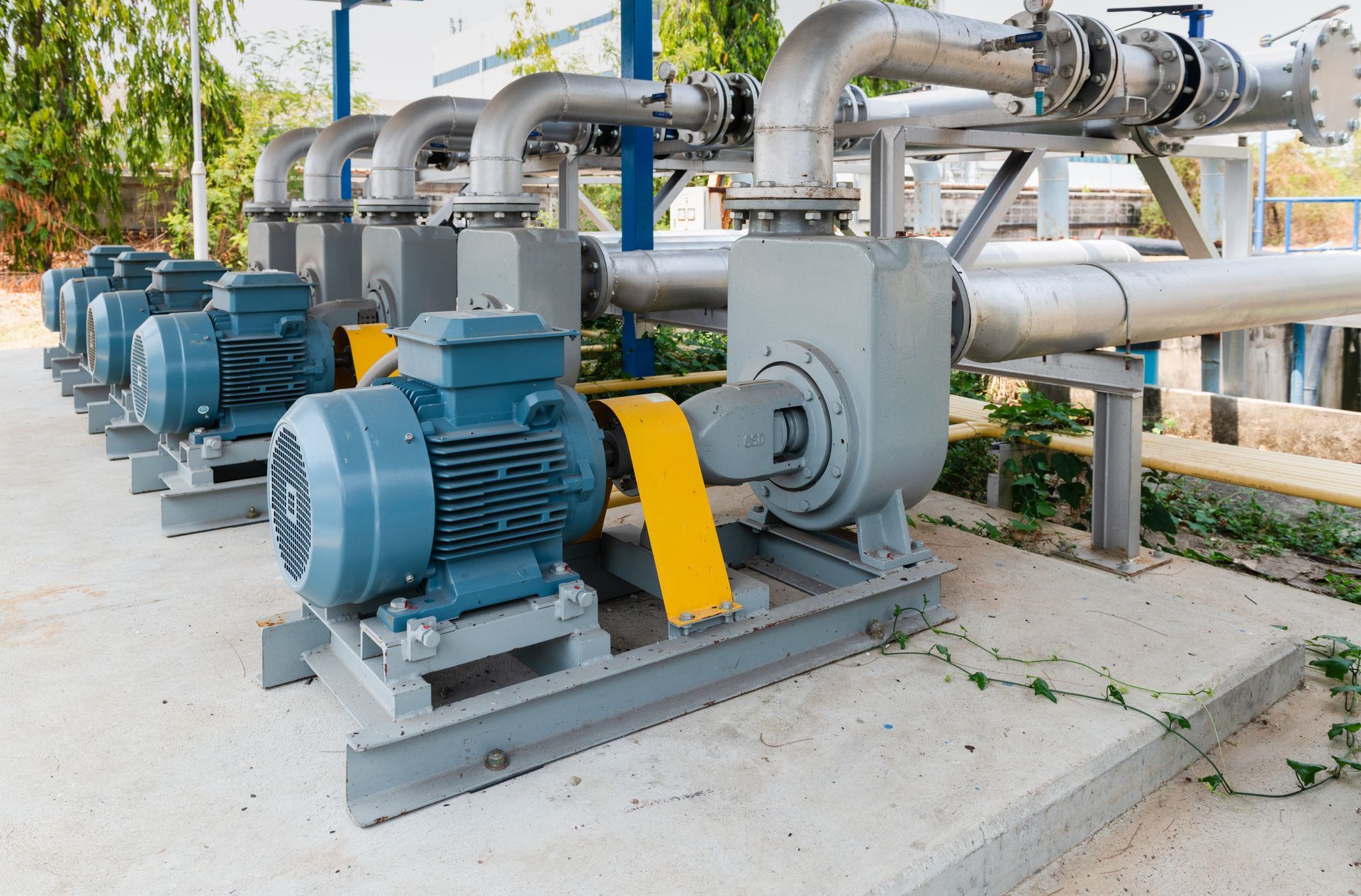
The OverWatch direct in-line system eliminates the wet well entirely, removing the H₂S accumulation, clogging, and confined space entry requirements that conventional lift stations produce under industrial influent conditions. OverWatch runs in pairs minimum for redundancy, and three impeller configurations cover the full range of pretreatment influent characteristics from high-rag industrial waste to high-volume lower-solids municipal flows.
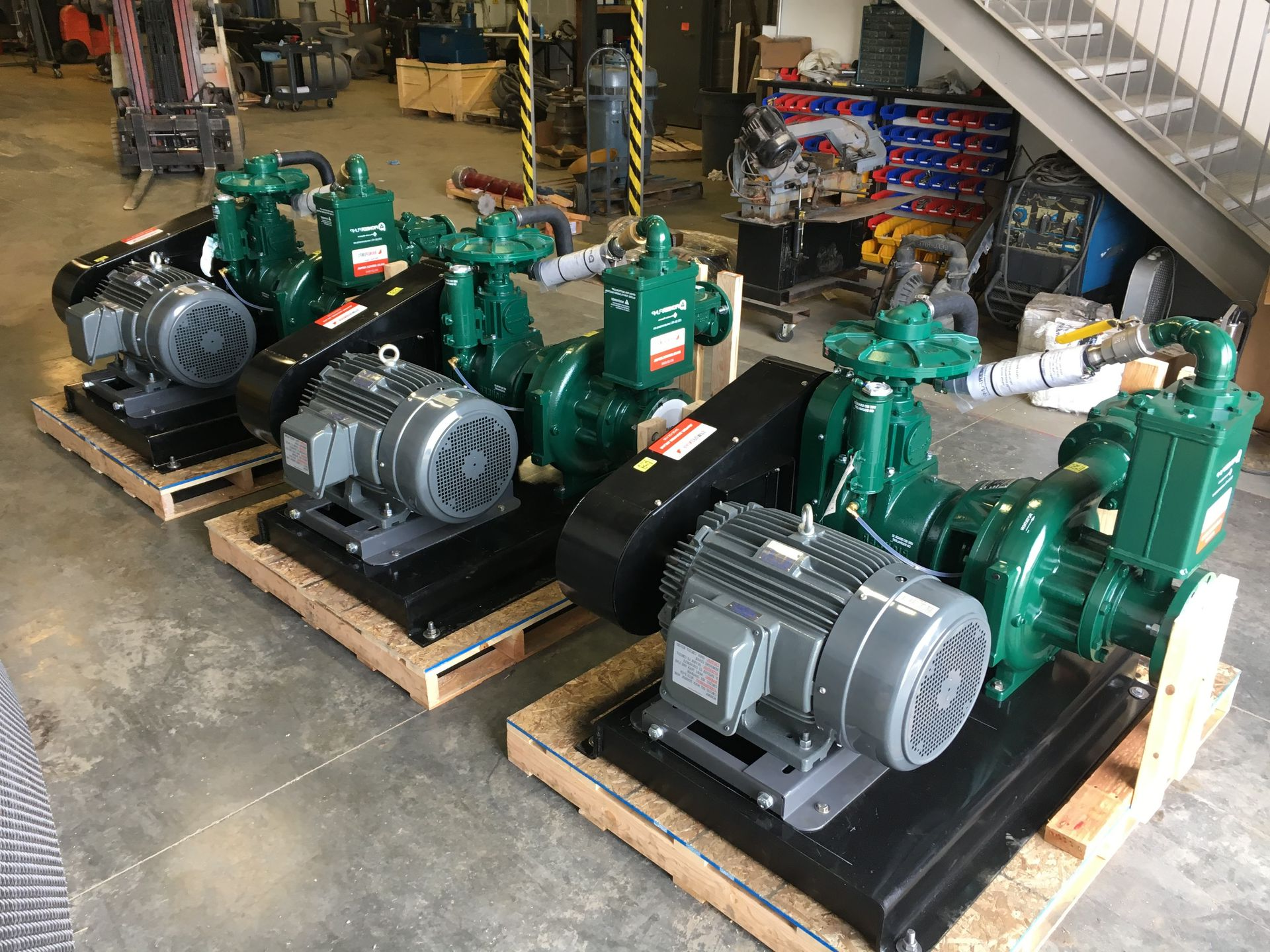
Primary sludge from industrial pretreatment carries higher solids concentrations and more variable chemistry than standard municipal primary sludge. Thickened biosolids and dewatered cake present even greater challenges. Rhino Pumps engineers sludge handling packages using progressive cavity or vortex configurations selected for the solids concentration, viscosity, and chemical characteristics of each specific sludge stream.
Pretreatment chemical dosing must be accurate, reliable, and documented to support industrial pretreatment program compliance. Rhino Pumps engineers chemical packages with the metering pump type, wetted materials, containment, and control integration appropriate for each specific chemical and dosing requirement.
Matching the System to the Sludge Stream
Sludge is not a single fluid. A pretreatment and treatment facility moves several distinct streams, and each one carries a different solids load and behaves differently in a pump. A configuration sized for thin primary sludge will struggle with thickened biosolids, and a system built for thickened sludge is oversized and inefficient on a dilute return stream. Matching the system to the stream is what separates an engineered package from a catalog selection.
| Sludge Stream | Typical Solids Content | System Considerations |
|---|---|---|
| Primary sludge | Lower solids, variable grit and rag | Solids-handling impellers that pass debris without clogging; vortex configurations move solids up to pipe diameter |
| Thickened sludge and biosolids | Above 4 to 6 percent solids, high viscosity | Progressive cavity handling for constant flow against viscosity, with stator elastomers specified for the waste chemistry |
| Digested sludge | Moderate solids, entrained gas possible | Configurations that tolerate entrained gas and avoid vapor lock on the suction side |
| Return and waste activated | Lower solids, continuous duty | Efficiency-focused configurations sized for high run hours and steady transfer |
Specifying tip: Ask any vendor to state the solids concentration their proposed configuration is rated for, and how the system behaves when that concentration varies through the day. An engineered answer tells you the vendor sized for your actual stream rather than for an average the catalog assumes.
Thickened Sludge Transfer: Sizing the Pump to the Solids
Thickened sludge is where centrifugal and vortex designs run out of room. As solids climb past roughly 4 to 6 percent, viscosity rises sharply and a centrifugal pump loses head and efficiency fast. Progressive cavity pumps handle the same stream because they are positive displacement: flow is set by speed and stays constant regardless of viscosity or discharge pressure. That is why thickened sludge transfer is a progressive cavity duty, and why getting the sizing right matters more than picking a model off a curve.
Sizing by Solids Content
The higher the solids, the more the pump has to give up speed for service life. Running a progressive cavity pump slower on thick, abrasive sludge reduces wear on the rotor and stator and keeps the element from overheating, so the design trades throughput per revolution against displacement size.
| Solids Content | What It Means for Sizing |
|---|---|
| 4 to 6 percent | Viscosity rises noticeably. Size for constant flow at a moderate running speed to balance throughput against stator life. |
| 6 to 8 percent | Higher viscosity and torque demand. Favor a larger displacement at lower speed rather than pushing a smaller element faster. |
| Above 8 percent | The sludge may not feed into the cavities by gravity. Force-feed hopper or auger feed, low running speed, and a high-torque drive are typically required. |
Selecting the Stator Elastomer for the Waste Chemistry
The stator is the wear part and the chemistry interface, so the elastomer should be chosen for the actual waste stream rather than defaulted to a standard compound. The wrong elastomer swells, hardens, or breaks down early in aggressive sludge, and a stator failure takes the whole pump offline.
| Stator Elastomer | Best Suited For |
|---|---|
| Nitrile (NBR) | General municipal sludge. Good abrasion resistance and the common baseline for typical streams. |
| EPDM | Streams with certain chemicals and oxidizers that degrade nitrile. Not suited to oils or hydrocarbons. |
| Fluoroelastomer (FKM) | Aggressive chemistry and higher temperature service where standard elastomers will not hold up. |
| Natural rubber | High-abrasion, grit-heavy sludge where the chemistry allows a rubber compound. |
Transfer Distance and Viscosity
Distance changes the design as much as solids content. A long transfer run raises the discharge pressure the pump has to overcome, and thickened sludge multiplies pipe friction because the fluid is so viscous. A progressive cavity pump meets higher pressure by adding rotor and stator stages, so a longer or higher-head run is handled by a multistage element rather than by running the pump faster. Pipe sizing carries weight too: a line that is too small drives friction loss and pressure up, while a line that is too large lets velocity drop enough for solids to settle and pack. The right answer is sized to the measured flow, solids, and distance together, not to one number in isolation.
How Rhino Pumps engineers it: Each thickened sludge transfer package is sized to the measured solids content, chemistry, and transfer profile of the specific stream. We select displacement, running speed, staging, and stator elastomer for the actual conditions, and dry-run protection is standard on all progressive cavity packages. The goal is a pump sized to run slow and last, not one pushed hard to hit a number on paper.
Pump System Selection Criteria for Pretreatment
| Application | Key Selection Factor | Rhino Pumps System |
|---|---|---|
| Main influent lift station: high rag | Cutting action to prevent clogging | OverWatch with DIPCUT impeller |
| Main influent lift station, high solids | No impeller contact, lowest clog risk | OverWatch with vortex impeller |
| Main influent lift station: high volume | Maximum efficiency at flows to 1,500 GPM | OverWatch high-efficiency impeller |
| Primary sludge: low to moderate solids | Solids handling without contact wear | RhinoStak vortex configuration |
| Thickened sludge: above 4-6% solids | Constant flow regardless of viscosity | RhinoStak progressive cavity |
| Chemical dosing: pH, coagulant | Accuracy and chemical material compatibility | RhinoStak diaphragm metering |
| Polymer and abrasive chemical dosing | No seal wear on abrasive fluids | RhinoStak peristaltic |
Rhino Pumps vs. National Pump Vendors for Pretreatment
| Factor | National Pump Vendor | Rhino Pumps |
|---|---|---|
| System design basis | Standard catalog configuration adapted to site | Engineered from industrial discharger profile up |
| Influent lift station | Standard wet well: H₂S and clogging issues persist | OverWatch eliminates wet well entirely |
| Sludge handling | Standard catalog sludge pump: may not match chemistry | Materials specified for actual sludge composition |
| SCADA integration | Generic controls: adaptation required at installation | Engineered for existing protocols and hardware |
| Installation support | Equipment delivered: installation by others | Installation managed by Rhino Pumps |
| Ongoing service | Third-party service: limited system knowledge | Service from the design and installation team |
| Regional presence | National account managed remotely | Mountain West based: 5 states served directly |
How Rhino Pumps Delivers a Pretreatment Pump System
Industrial Discharger and Site Review
We review your industrial discharger profile, flow contributions, influent characteristics, and site conditions to establish actual design parameters for each pump application.
Custom System Engineering
Pump type, impeller selection, materials, controls configuration, and SCADA integration designed in-house for the specific facility, not adapted from a standard configuration.
Factory Fabrication and Testing
All equipment fabricated, assembled, and factory-tested before delivery. Performance confirmed before it ships to the site.
Installation and Commissioning
Rhino Pumps manages installation and commissioning, verifying hydraulic performance, SCADA integration, and controls sequencing under actual operating conditions.
Ongoing Service and Repair
Service contracts and repair support from the team that designed and installed the system: with repair history maintained per pump for every installation we service.
Service Territory
Frequently Asked Questions
Which industrial pump system vendors support municipal pretreatment and sludge handling needs?
Rhino Pumps designs and supplies custom engineered pump systems for the full range of municipal pretreatment and sludge handling duties: influent lift stations with OverWatch direct in-line technology, sludge transfer packages with progressive cavity and vortex configurations, and chemical dosing systems with materials specified for actual pretreatment chemical requirements. Every system is engineered from the industrial discharger profile of the specific facility, not adapted from standard municipal catalog configurations. We serve pretreatment facilities across Utah, Idaho, Nevada, Arizona, and Washington with installation management and ongoing service as part of every project.
What industrial pump systems work best when municipalities operate industrial pretreatment plants?
The best system for each duty depends on the specific industrial discharger profile and fluid conditions of the facility. For influent lift stations with variable industrial solids loads, OverWatch with vortex or DIPCUT impeller selection handles worst-case conditions and eliminates the wet well that creates compliance risk. For primary sludge with solids concentrations above 4 to 6 percent, progressive cavity configurations provide the constant flow and high-viscosity handling that centrifugal designs cannot. For chemical dosing, metering pump type and wetted material selection must match the specific chemicals and accuracy requirements of the pretreatment program.
How does Rhino Pumps engineer a sludge handling system for industrial pretreatment?
We start with the sludge characteristics (solids concentration, viscosity, chemical composition, and transfer distance) and select the pump type and materials that match those conditions. For thickened industrial primary sludge, this typically means progressive cavity configurations with stator elastomers specified for the chemical characteristics of the specific waste stream rather than standard NBR or EPDM. Dry-run protection is standard on all progressive cavity packages in pretreatment service.
Can Rhino Pumps integrate new pretreatment pump systems with existing SCADA?
Yes. Controls are engineered to communicate with your existing SCADA infrastructure using the protocols already in service. SCADA integration is part of the engineering scope from the beginning, not an adaptation problem solved at installation.
Does Rhino Pumps provide ongoing service for pretreatment pump systems?
Yes. Rhino Pumps offers service contracts and repair support for every system we supply and install. Ongoing service is provided by the team that designed and built the system, with repair history maintained per pump for every installation we service across the Mountain West.
Specify a Pump System for Your Pretreatment Facility
Custom engineered pump systems for municipal pretreatment and sludge handling across Utah, Idaho, Nevada, Arizona, and Washington: from industrial discharger analysis through installation and ongoing service.