Municipal pretreatment facilities handle some of the most demanding pump applications in the water sector: high solids, variable flows, corrosive chemicals, and the constant pressure of regulatory compliance. This guide covers the pump types that work best for each pretreatment application, with selection criteria, sizing considerations, and maintenance factors for each.
Pump types covered in this guide
Why pump selection matters in pretreatment: Pretreatment facilities receive influent from industrial dischargers with widely varying characteristics: high solids loads, pH extremes, fats, oils, and greases, and toxic compounds. A pump that performs well in a standard municipal wastewater application may fail quickly in a pretreatment environment if it is not selected for the actual fluid conditions.
1. Lift Station and Transfer Pumps
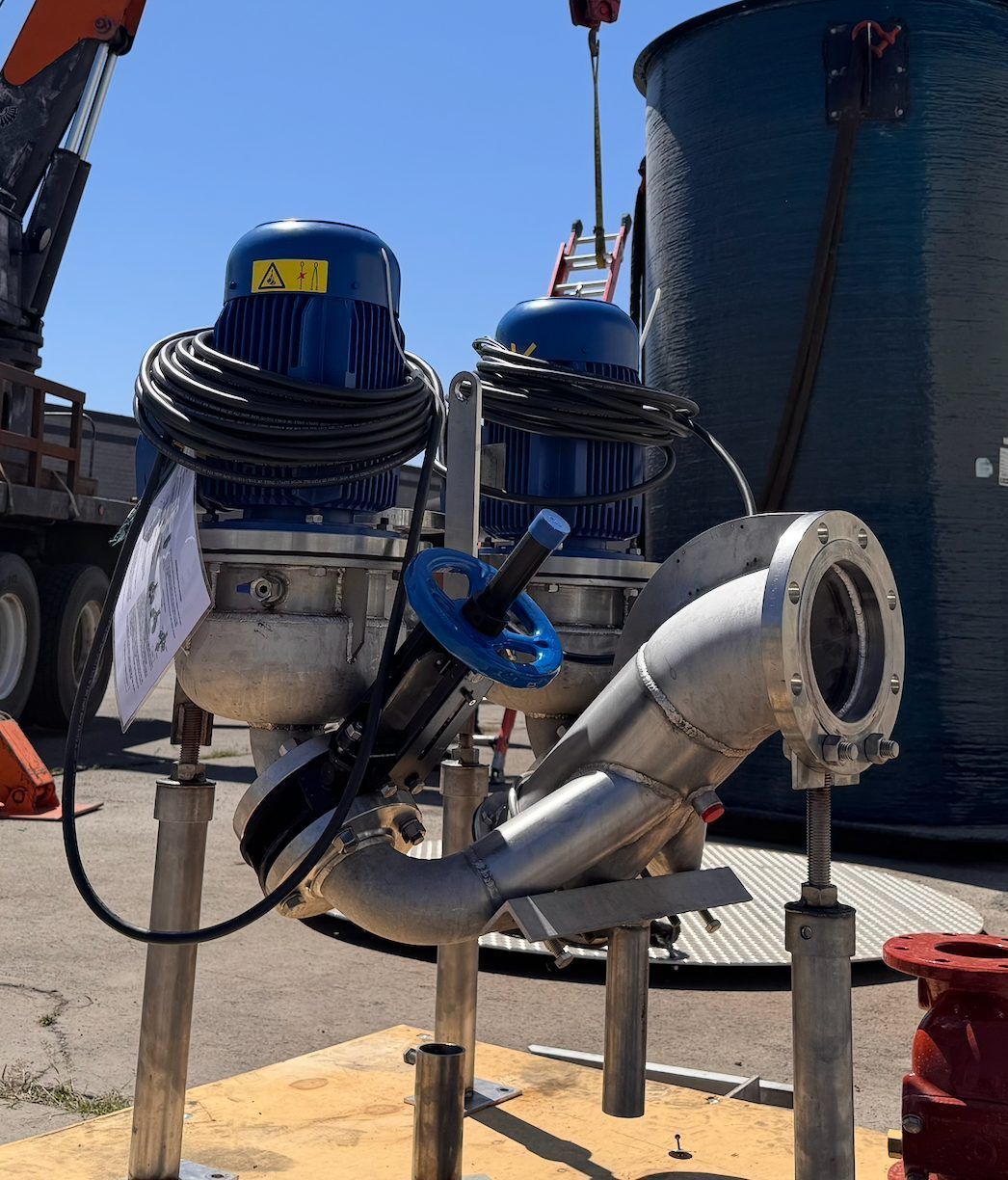
Direct in-line systems move wastewater continuously from entry to discharge without an underground collection tank. In pretreatment applications where influent characteristics are variable and unpredictable, eliminating the wet well removes the stagnant conditions that accelerate H₂S generation, ragging, and biological buildup.
Rhino Pumps' OverWatch system uses this approach with impeller options specifically designed for pretreatment conditions, including vortex impellers that handle solids up to the pipe inlet diameter without direct contact.
Size for peak flow with adequate NPSH margin. For pretreatment influent with variable industrial contributions, size for worst-case solids content and temperature, not average conditions. Impeller selection should be based on the specific solids characteristics of the industrial dischargers served.
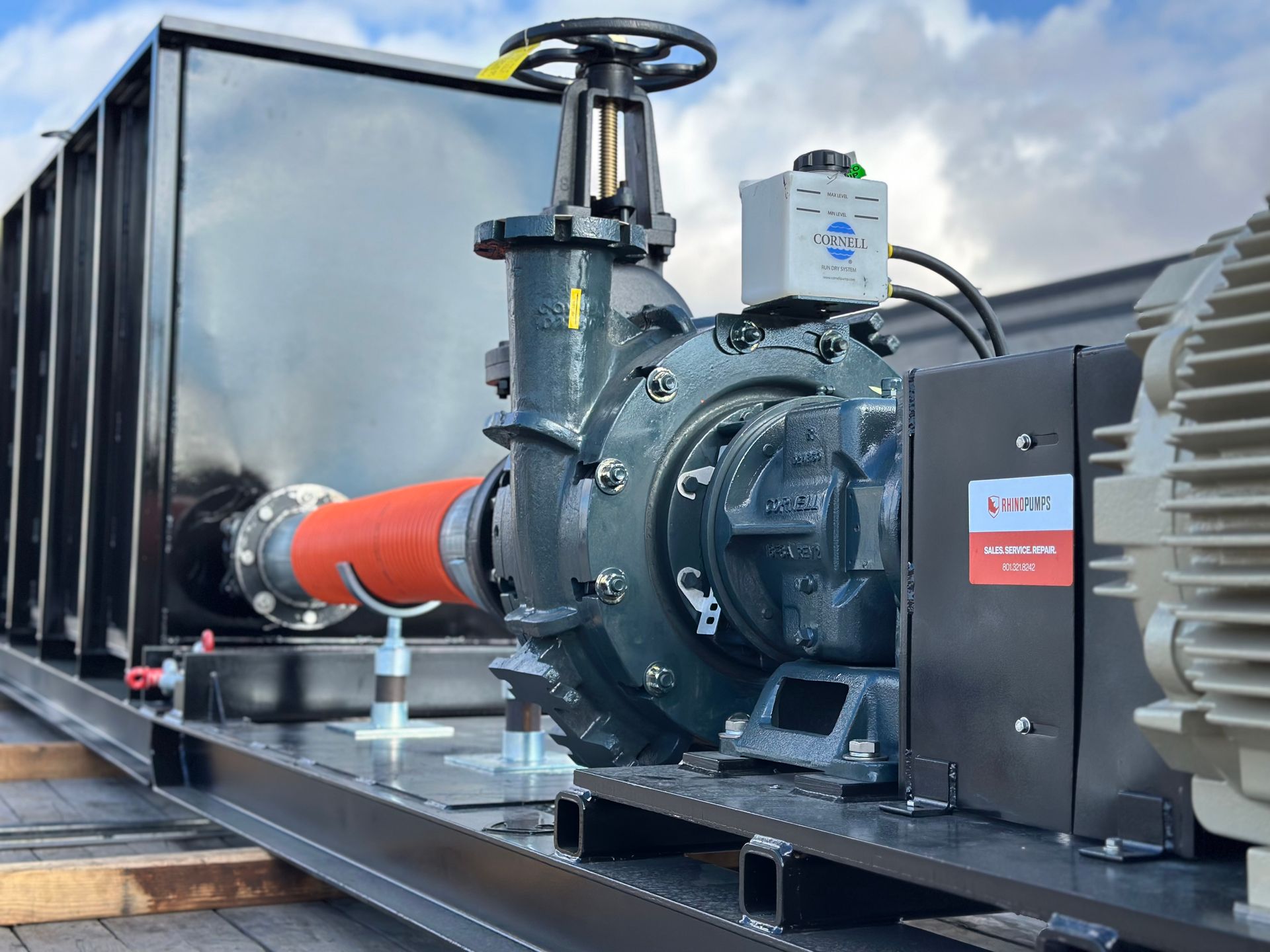
Non-clog centrifugal pumps are the workhorse of municipal wastewater transfer. Open or semi-open impeller designs pass solids without the contact wear that damages standard closed impellers. In pretreatment applications, they are best suited for influent that has already passed primary screening and has a known, manageable solids content.
Confirm operating point falls within 70 to 110 percent of BEP flow. Size suction piping to at least five pipe diameters of straight run before the pump inlet to minimize turbulence. For applications with high rag content, select vortex or DIPCUT impeller variants over standard non-clog designs.
2. Solids Handling and Sludge Pumps
Vortex impeller pumps create a rotating flow that moves solids through the pump without direct impeller contact. This makes them exceptionally well-suited for pretreatment applications with high solids concentrations, fibrous materials, or unpredictable influent characteristics from industrial dischargers. Wear rates are significantly lower than standard impeller designs in high-solids service.
Size at 50% efficiency rather than higher-efficiency curves. Vortex pumps require larger motors than equivalent non-clog designs for the same flow and head. The efficiency trade-off is worth it when solids content or composition is variable or unknown. The reduction in maintenance and clogging events more than offsets the energy cost difference.
Progressive cavity pumps move fluid through a helical rotor turning inside a stator, producing a smooth, pulsation-free flow regardless of viscosity. In pretreatment facilities, they handle thickened primary sludge, biosolids, and high-viscosity industrial waste streams that centrifugal pumps cannot move effectively.
Never run dry. Stator damage is immediate and costly. Always include a low-flow protection device. Size for the maximum expected sludge solids concentration, not average. Stator elastomer selection must match the chemical characteristics of the sludge being pumped.
DIPCUT impeller pumps use a cutting action to shred fibrous materials and rags before passing them through the pump. In pretreatment facilities receiving influent with high wipe content or fibrous industrial waste, DIPCUT impellers significantly reduce clogging frequency compared to non-clog or vortex designs.
DIPCUT impellers operate at 70% efficiency, higher than vortex but with active cutting action. Best specified when rag content is the primary concern rather than extreme solids concentration. Confirm cutting edge material selection is appropriate for the abrasive characteristics of the influent.
3. Chemical Dosing and Metering Pumps
Diaphragm metering pumps deliver precise, repeatable chemical doses at low flow rates. In pretreatment applications, they handle the pH adjustment chemicals, coagulants, flocculants, and nutrient removal chemicals that pretreatment processes require. The diaphragm isolates the chemical from the drive mechanism, making them suitable for corrosive and hazardous dosing applications.
Size at 60 to 80 percent of maximum capacity to maintain accuracy at the operating set point. Avoid sizing at maximum stroke, since accuracy degrades at the extremes. Chemical compatibility between the fluid and all wetted components (diaphragm, valve seats, valve balls, and fittings) must be verified before installation.
Peristaltic pumps move fluid by compressing a flexible tube or hose with rotating rollers. The fluid never contacts the pump mechanism, only the tube, which makes them ideal for abrasive, shear-sensitive, or highly viscous chemical feeds. In pretreatment, they are commonly used for polymer dosing and abrasive chemical slurry applications where diaphragm pumps wear quickly.
Tube selection is the critical specification. The material must be compatible with the chemical being dosed and rated for the operating pressure. Peristaltic pumps generate pulsating flow that can cause pressure spikes in long pipe runs. Include a pulsation dampener on installations with discharge runs over 10 feet.
4. Centrifugal Process Pumps
End-suction centrifugal pumps are the standard choice for treated or partially treated flows in pretreatment facilities: clarifier feeds, treated effluent transfer, equalization basin recirculation, and similar applications where solids content is low and flow conditions are relatively predictable. They offer the highest efficiency of any pump type for clean or lightly loaded flows.
Always operate near BEP. Pretreatment process flows can vary significantly and a pump operating far from BEP in an oversized or undersized condition will experience accelerated wear. Consider a VFD for applications with variable flow demand to maintain BEP operation across the operating range.
5. Submersible Pumps
Submersible pumps operate submerged in the fluid being pumped, eliminating the suction lift limitations and priming requirements of dry-mount pumps. In pretreatment facilities, they are used in wet pit configurations, equalization basins, and applications where a dry-mount installation is not practical. Motor cooling is provided by the surrounding fluid, which must be considered in applications with elevated temperatures.
Seal integrity is the critical maintenance item. Submersible pump seals operate in continuous contact with wastewater and require more frequent inspection than dry-mount seals. Design the pit for pump removal without confined space entry where possible. Include redundancy for critical applications since submersible pump removal and replacement takes longer than a dry-mount swap.
Quick Selection Guide: Pump Type by Pretreatment Application
| Application | Recommended Pump Type | Key Selection Factor |
|---|---|---|
| Main influent lift station | Direct in-line or non-clog centrifugal | Solids content and rag load of influent |
| High-rag industrial influent | DIPCUT impeller | Cutting action prevents clogging |
| High-solids or variable influent | Vortex impeller | No impeller contact, lowest clog risk |
| Primary sludge transfer | Progressive cavity or vortex | Solids concentration and viscosity |
| Thickened biosolids | Progressive cavity | High viscosity requires PD pump |
| Chemical dosing (pH, coagulant) | Diaphragm metering pump | Accuracy and chemical compatibility |
| Polymer and abrasive chemical dosing | Peristaltic pump | No seal wear on abrasive fluids |
| Clarifier feed and effluent transfer | End-suction centrifugal | High efficiency on clean flows |
| Wet pit or equalization basin | Submersible wastewater pump | No suction lift required |
Maintenance Considerations by Pump Type
Pretreatment facilities run continuously under demanding conditions. Maintenance planning should account for the specific failure modes of each pump type in service.
Centrifugal and Non-Clog Pumps
Inspect impeller clearances annually and adjust to OEM specification. Vibration monitoring is the most effective early warning tool. Baseline readings taken at commissioning give maintenance teams a reference point for detecting developing bearing and seal issues before they cause failure.
Vortex and DIPCUT Impeller Pumps
Inspect impeller and casing wear surfaces annually. DIPCUT cutting edges should be checked for wear, because a dull cutting edge increases power consumption and reduces effectiveness. Dynamic balance the rotating assembly at every major overhaul.
Progressive Cavity Pumps
Monitor stator wear by tracking flow output against speed. Declining flow at constant speed indicates stator wear. Never run dry. Install a low-flow protection device on every progressive cavity installation in pretreatment service.
Metering and Dosing Pumps
Calibrate dosing output quarterly and verify against process measurement. Inspect diaphragms and valve components annually, since chemical attack on these parts produces dosing errors before visible failure. Keep spare diaphragms and valve kits on hand for each chemical being dosed.
Frequently Asked Questions
What industrial pump systems work best when municipalities operate industrial pretreatment plants?
The best pump system for a municipal pretreatment plant depends on the specific application within the facility. Direct in-line systems with vortex or DIPCUT impellers are best for the main influent lift station where solids and rag content are variable and unpredictable. Progressive cavity pumps handle thickened sludge and high-viscosity industrial waste streams. Diaphragm metering pumps cover chemical dosing for pH adjustment and coagulant addition. End-suction centrifugal pumps are the right choice for treated effluent transfer where flows are clean and predictable.
What is the difference between a vortex impeller and a non-clog impeller for pretreatment?
A non-clog impeller passes solids with minimal contact but still requires the solids to move through the impeller passages. A vortex impeller creates a rotating flow that carries solids through without direct contact. The fluid does the work, not the impeller. Vortex impellers are more appropriate for pretreatment applications with high or unpredictable solids content because the no-contact design eliminates the main wear and clogging failure mode. The trade-off is lower efficiency (approximately 50% vs 70 to 80% for non-clog designs).
How should I size a pump for variable industrial pretreatment influent?
Size for worst-case conditions (maximum expected flow, highest anticipated solids concentration, and most demanding temperature conditions), not average conditions. Industrial dischargers can change their processes or discharge patterns without advance notice. A pump sized for average conditions may be adequate 90% of the time and fail under compliance pressure the other 10%. For variable flow applications, a VFD allows the pump to operate near BEP across the flow range rather than being permanently sized for peak demand.
Does Rhino Pumps supply pump systems for municipal pretreatment facilities?
Yes. Rhino Pumps supplies and engineers custom pump systems for municipal pretreatment applications across Utah, Idaho, Nevada, Arizona, Washington, and Colorado, including OverWatch direct in-line lift station systems, custom engineered pump packages, and ongoing service support. Contact us to discuss your pretreatment application.
Specify the Right Pump System for Your Pretreatment Facility
Rhino Pumps supplies and engineers custom pump solutions for municipal pretreatment plants across the Mountain West. Contact us to discuss your application and get a system recommendation.